






What's Happening?
Dr. Joseph Bedway, a general surgeon at Orlando Health Sebastian River Hospital, has completed his 1,000th robotic-assisted surgery. This milestone, achieved on November 9, 2026, highlights his extensive experience with minimally invasive operations,
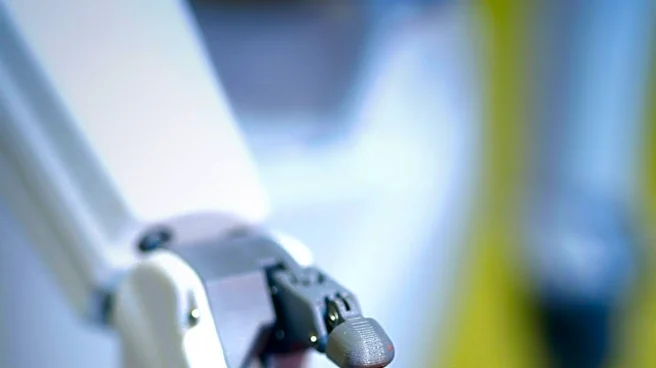
which began during his residency at Orlando Health Regional Medical Center in 2010. Dr. Bedway has utilized robotic-assisted technology for a variety of procedures, including hernias, gallbladder removals, and colon cancer excisions. Despite the increasing prevalence of robotic surgery, Dr. Bedway notes that many patients still hold misconceptions about the technology. He aims to clarify these misunderstandings, emphasizing that the robot is a tool controlled entirely by the surgeon, enhancing precision and flexibility rather than replacing human skill. Hospital leaders, including Dan Bowen, President of Orlando Health Sebastian River Hospital, commend Dr. Bedway's achievement as a significant advancement in surgical care for local residents.
Why It's Important?
Dr. Bedway's achievement of 1,000 robotic-assisted surgeries is important for several reasons. Firstly, it signifies a growing trend in healthcare towards advanced, minimally invasive surgical techniques, which often lead to faster recovery times, smaller incisions, and reduced patient discomfort. This advancement directly benefits patients in Southern Brevard and Indian River counties by expanding access to cutting-edge medical care close to home. Secondly, Dr. Bedway's efforts to debunk common myths about robotic surgery are crucial for patient education and trust. By clarifying that surgeons maintain full control and that the technology enhances rather than replaces human expertise, he helps alleviate patient anxieties and promotes informed decision-making. This milestone also positions Orlando Health Sebastian River Hospital as a leader in surgical innovation, potentially attracting more patients and skilled medical professionals to the region, thereby improving overall healthcare quality and accessibility.
What's Next?
As robotic-assisted surgery continues to evolve, the focus will likely remain on further refining the technology and expanding its applications to an even broader range of medical procedures. Dr. Bedway's continued work will contribute to the growing body of experience and data supporting the efficacy and safety of these techniques. Educational initiatives, similar to Dr. Bedway's myth-debunking efforts, will be essential to ensure public understanding and acceptance of advanced surgical methods. Orlando Health Sebastian River Hospital may leverage this milestone to further invest in robotic surgical systems and training for its medical staff, solidifying its reputation as a center for advanced care. The long-term trend suggests an increasing integration of robotics into surgical practices, potentially leading to improved patient outcomes and more efficient healthcare delivery.
Beyond the Headlines
The increasing adoption of robotic-assisted surgery, exemplified by Dr. Bedway's milestone, raises broader ethical and societal questions. While the benefits of precision and faster recovery are clear, there are ongoing discussions about the cost-effectiveness of such advanced technology and equitable access to these procedures across different socioeconomic groups. The role of artificial intelligence in future surgical robotics also presents a complex ethical landscape, prompting considerations about the balance between human judgment and machine autonomy. Furthermore, the emphasis on technology in healthcare could influence medical education, requiring surgeons to develop new skill sets that integrate technological proficiency with traditional surgical expertise. This shift could lead to a redefinition of surgical excellence, where mastery of advanced tools becomes as critical as anatomical knowledge and manual dexterity.