

What's Happening?
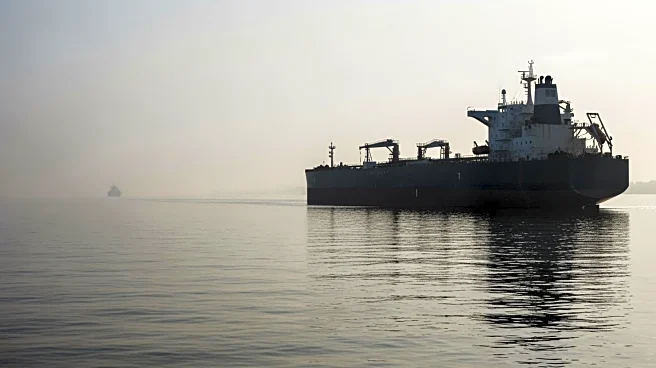
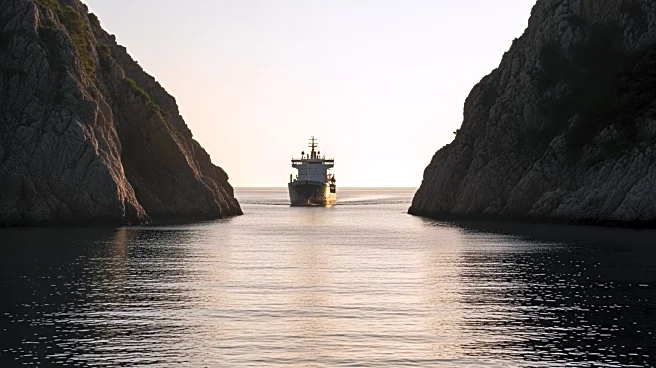
An oil supertanker carrying Iraqi crude, managed by Japan's Mitsui OSK Lines Ltd, has raised questions regarding its transit through the Strait of Hormuz. The tanker, named Omega Trader, appeared to have exited the strait based on its signals, but its manager
confirmed that it has not transited the waterway. The ship's signal indicated it reached Mumbai, India, although its last known position was inside the Persian Gulf over ten days ago. The situation is complicated by signal jamming, which has affected the tracking of vessels in the region. The ongoing conflict in Iran has significantly disrupted traffic through the Strait of Hormuz, a critical passage for global oil and liquefied natural gas supply.
Why It's Important?
The Strait of Hormuz is a vital chokepoint for the global energy market, with about 20% of the world's oil and liquefied natural gas passing through it. The current conflict in Iran has led to a major supply disruption, described by the International Energy Agency as the largest in the history of the oil market. This has resulted in increased energy costs worldwide. The uncertainty surrounding the Omega Trader's transit highlights the challenges faced by the shipping industry in navigating this critical region. The situation underscores the geopolitical tensions affecting global energy security and the potential economic impact on countries reliant on oil imports.
What's Next?
The ongoing conflict in Iran and the resulting disruption in the Strait of Hormuz are likely to continue affecting global oil supply and prices. Shipping companies and governments will need to closely monitor the situation and explore alternative routes or solutions to ensure energy security. The involvement of international stakeholders, including diplomatic engagements with Iran, may be necessary to facilitate safe passage for vessels. The industry may also need to enhance tracking technologies to mitigate the effects of signal jamming and ensure accurate monitoring of tanker movements.