








What's Happening?
Ukraine and its European allies are actively working to develop their own sovereign satellite communication networks to reduce their reliance on Elon Musk's Starlink. This initiative follows disruptions to battlefield communications caused by restrictions
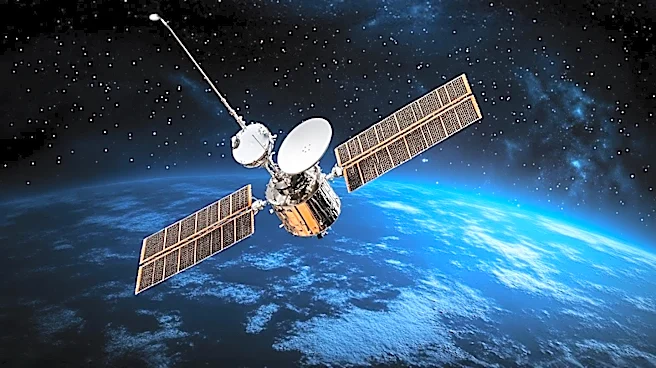
on Starlink and Starshield networks in Ukraine, which rendered some Ukrainian interceptor drones ineffective against Russian attacks. The Ukrainian military experienced these issues for much of October, highlighting a critical vulnerability in depending on a single commercial provider. While Starlink has been instrumental in providing vital internet connections for Ukrainian soldiers, Iranian dissidents, and remote areas, the recent events have prompted Kyiv and its partners to accelerate efforts to build independent alternatives. On October 27, Ukrainian defense tech company HIMERA and Denmark’s GomSpace announced a successful test of OBRIA NANO, the first satellite intended for a sovereign Ukrainian communications network, launched aboard a SpaceX Falcon 9 rocket on October 1. Europe is also pursuing its own large-scale alternative, IRIS², though it is years away from becoming operational.
Why It's Important?
The push by Ukraine and Europe to create independent satellite communication systems underscores a significant shift in how nations view critical infrastructure and national security in the digital age. The reliance on a single commercial entity, even a seemingly friendly one, for military communications has proven to be a substantial vulnerability. This situation highlights the potential for private corporations to exert considerable influence over military operations and national interests, as the owner of a satellite connection retains ultimate technical control over its functionality. The incident in Ukraine has revealed that critical allied military capabilities can be susceptible to decisions made by private companies, whose relationship with governments can be fluid. This development could lead to increased investment in national and regional space programs, fostering greater autonomy and reducing geopolitical risks associated with commercial dependencies. It also signals a potential re-evaluation of the balance between commercial innovation and national security imperatives, particularly in the context of modern warfare and communication technologies.
What's Next?
Ukraine and its European partners will continue to invest in and develop their own satellite constellations, such as OBRIA NANO and the EU's IRIS² program, to progressively reduce their dependence on Starlink. While these alternatives may not immediately rival Starlink's scale, the goal is to diversify communication infrastructure and mitigate future risks. Finland's ICEYE and Nokia have also signed an agreement with Ukraine's Defense Ministry to explore a separate constellation, with initial satellites expected to launch by 2028. However, a significant challenge remains in Europe's reliance on American launch providers, including SpaceX, to get these satellites into orbit. This ongoing dependency means that even as Europe seeks to break free from Starlink's service control, it may still rely on SpaceX for launch capabilities. The long-term objective is to achieve full space autonomy, encompassing both satellite development and launch capabilities, to ensure secure and uninterrupted communications for national security and military operations.
Beyond the Headlines
The controversy surrounding Starlink's role in Ukraine raises profound questions about the intersection of private enterprise, national sovereignty, and military strategy. The incident highlights a new form of geopolitical leverage, where a single individual or company can significantly impact international conflicts and national security. This situation could prompt a broader re-evaluation of regulatory frameworks for commercial space technologies, particularly those with dual-use capabilities. It also underscores the ethical dilemmas faced by technology companies operating in conflict zones, balancing commercial interests with humanitarian and strategic considerations. The drive for sovereign communication networks reflects a growing global trend towards technological self-reliance, as nations seek to protect themselves from external control and ensure the resilience of their critical infrastructure. This could lead to a more fragmented global space economy, with multiple national and regional constellations competing or coexisting, rather than a single dominant commercial provider.