






What's Happening?
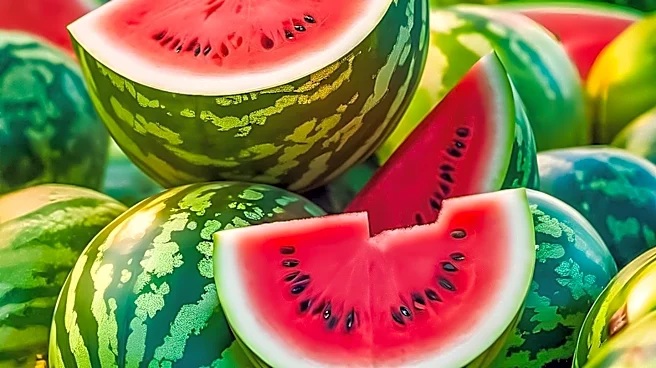
Georgia Agriculture Commissioner Tyler J. Harper has officially declared July 2026 as 'Georgia Grown Watermelon Month.' This proclamation celebrates the state's significant contribution to watermelon farming, which is a major agricultural activity in Georgia.
The state dedicates approximately 35,000 acres to watermelon production, with a 2024 farm gate value of $220.5 million. Georgia is recognized as a national leader in watermelon production, particularly in Cordele, known as the 'Watermelon Capital of the World,' where over 200 million pounds of watermelon are grown annually. Commissioner Harper emphasized the importance of this crop and encouraged residents to support local farmers by purchasing Georgia-grown watermelons.
Why It's Important?
The declaration of 'Georgia Grown Watermelon Month' underscores the economic and cultural significance of watermelon farming in Georgia. This initiative not only highlights the state's agricultural prowess but also supports local farmers by promoting their produce. The watermelon industry contributes significantly to Georgia's economy, providing jobs and sustaining rural communities. By encouraging the purchase of locally grown watermelons, the initiative aims to boost the local economy and ensure the sustainability of farming practices. This celebration also raises awareness about the quality and freshness of Georgia's agricultural products, potentially increasing demand and market reach.
What's Next?
As 'Georgia Grown Watermelon Month' progresses, there may be increased marketing efforts and events to promote Georgia watermelons. Local farmers and agricultural organizations might collaborate to host festivals, tastings, and educational events to engage the community and tourists. These activities could enhance consumer awareness and appreciation for local produce, potentially leading to increased sales and support for Georgia's agricultural sector. Additionally, the initiative may inspire similar campaigns for other crops, further strengthening the state's agricultural identity and economic resilience.