



What's Happening?
President Trump has extended support to geothermal energy as part of his administration's energy policy, which also favors fossil fuels and nuclear energy. The administration has conferred special status on energy resources that can provide continuous
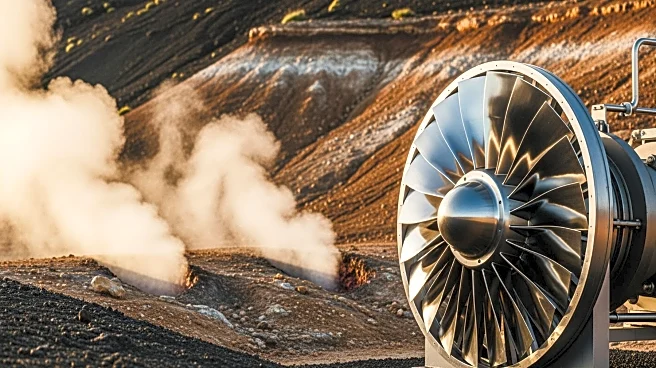
power, including geothermal, biomass, and hydropower. Recent advancements in geothermal technology, such as new underground mapping systems and drilling techniques, have expanded its potential reach. The U.S. Department of Energy has launched a 13-state collaboration to boost geothermal activity, with projects in states like Nevada and Utah already underway. Companies like Ormat and Fervo Energy are leading these efforts, with significant projects planned to increase geothermal capacity.
Why It's Important?
The inclusion of geothermal energy in the administration's energy policy highlights a shift towards diversifying energy sources while maintaining support for traditional fossil fuels. This move could impact the energy market by providing a cleaner alternative to coal and natural gas for baseload power generation. The development of geothermal energy could also reduce reliance on oil for heating and cooling systems. The policy may influence the energy sector by encouraging investment in geothermal projects, potentially leading to job creation and technological advancements. However, it also underscores the administration's continued support for fossil fuels, which may affect the transition to renewable energy.
What's Next?
The U.S. Department of Energy plans to continue supporting geothermal energy development through initiatives like the Geothermal Power Accelerator. This program aims to set statewide geothermal goals and reduce project costs. Companies involved in geothermal projects are expected to advance their initiatives, with significant capacity increases planned by 2028. The administration's energy policy may face scrutiny from environmental groups advocating for a stronger focus on wind and solar energy. The success of geothermal projects could influence future energy policies and the balance between renewable and fossil fuel energy sources.