







What's Happening?
A 44-year-old female passenger from El Salvador reportedly went overboard from Royal Caribbean's Odyssey of the Seas. The incident occurred in the early morning hours while the 4,200-passenger ship was sailing from Mykonos, Greece, toward Naples, Italy.
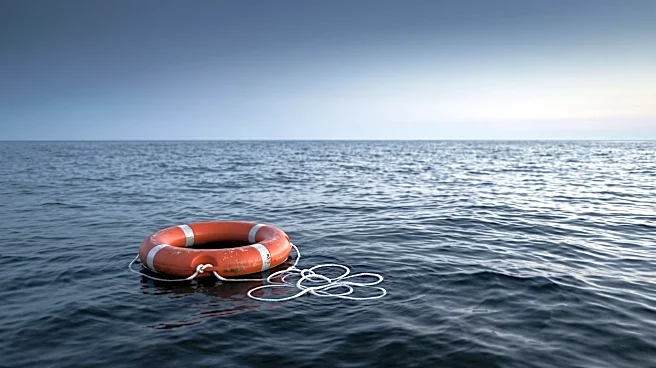
The crew reviewed security camera footage, confirming the woman went overboard approximately four hours after the event, complicating search efforts. The ship immediately turned around and began a search pattern about 70-72 miles southwest of Zakynthos, Greece. The Greek Joint Rescue Coordination Center (EKSED) joined the search with a patrol boat and helicopter, and nearby commercial vessels also assisted. Passengers reported that the captain announced the woman grabbed a life ring before entering the water, and some observed crew members retrieving a life ring with its light attached. After more than 12 hours of searching, neither the vessel nor the responding coast guard located the missing passenger. The ship subsequently left the search area and resumed its course.
Why It's Important?
This incident highlights the inherent risks associated with cruise travel, particularly the challenges of search and rescue operations at sea. The delay in discovering the passenger went overboard, reportedly four hours after the event, underscores the limitations of current monitoring systems on some cruise ships. The fact that the Odyssey of the Seas, a large modern vessel, was not explicitly reported to be equipped with an automatic man overboard system, raises questions about industry-wide safety standards. Such systems are designed to immediately alert the bridge and track an overboard person, potentially significantly improving rescue chances. The extensive search involving multiple agencies and vessels, yet yielding no recovery, demonstrates the vast and unforgiving nature of the open sea. For Royal Caribbean, such incidents can impact public perception and potentially lead to increased scrutiny of safety protocols, even as they state their Care Team is supporting the guest's loved ones.
What's Next?
Following the unsuccessful search, the Odyssey of the Seas has resumed its journey, with the scheduled port call in Naples canceled, replaced by a sea day. The local coast guard will likely continue to monitor the area where the incident occurred. Royal Caribbean has stated they are working with authorities and their Care Team is providing support to the guest's family, but they have not released additional details for privacy reasons. This event may prompt further discussions within the cruise industry and among maritime safety regulators regarding the implementation of advanced man overboard detection systems. While the immediate search has concluded, the long-term implications for the family of the missing passenger and for Royal Caribbean's operational procedures will likely continue to unfold. Future cruise itineraries may be adjusted to account for such unforeseen events, and passenger awareness of onboard safety procedures might be emphasized.
Beyond the Headlines
The incident on the Odyssey of the Seas brings to light the broader ethical and technological considerations surrounding passenger safety on large cruise liners. The reported delay in detecting the overboard event, despite the presence of security cameras, points to a potential gap in real-time monitoring and response capabilities. The absence of an automatic man overboard system on some vessels, as implied by the reporting, raises questions about the industry's adoption of available life-saving technologies. While privacy concerns are valid, the lack of detailed information from Royal Caribbean can fuel public speculation and concern. This event also touches upon the psychological impact on passengers and crew during such a prolonged and ultimately unsuccessful search, creating an 'eerie' atmosphere as described by those onboard. It underscores the delicate balance between passenger freedom and the need for robust safety measures in the unique environment of a cruise ship.