






What's Happening?
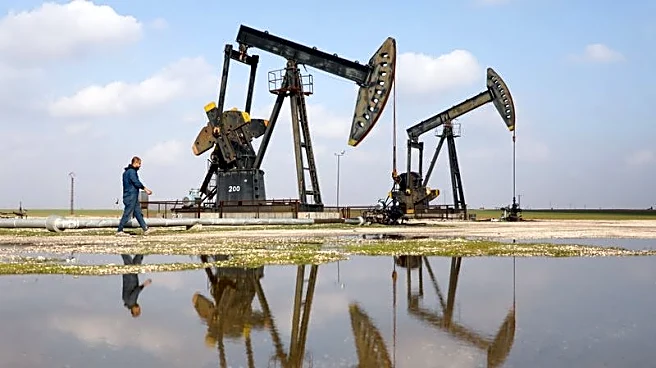
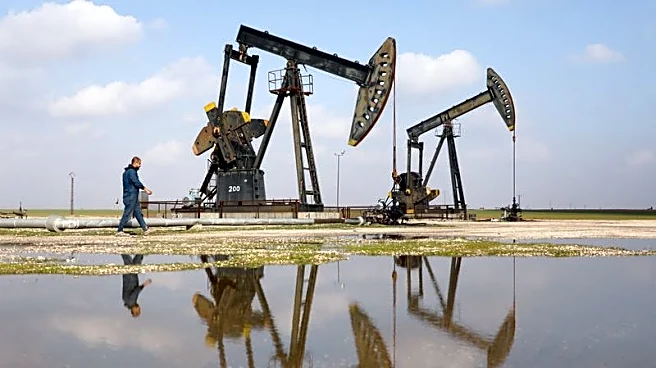
Ukraine's Security Service (SBU), in collaboration with the Armed Forces, conducted coordinated strikes on key Russian military infrastructure, including an aircraft plant in Crimea, port facilities in the Krasnodar region, and a major oil refinery in Volgograd.
The operation aimed to degrade Russia's military capabilities by targeting facilities critical to its war efforts. The strikes resulted in significant damage, including a large fire at the Port of Taman and disruptions at the Lukoil-Volgogradneftepererabotka refinery, one of Russia's largest oil-processing facilities. The SBU stated that these actions are part of a broader campaign to weaken Russia's ability to wage war against Ukraine.
Why It's Important?
These strategic strikes by Ukraine represent a significant escalation in the conflict, targeting Russia's military and economic infrastructure. By disrupting oil production and logistics, Ukraine aims to weaken Russia's war machine and reduce its capacity to sustain prolonged military operations. The attacks also demonstrate Ukraine's growing capability to conduct offensive operations deep within Russian territory, potentially altering the dynamics of the conflict. The international community will be closely watching these developments, as they could influence diplomatic efforts and the broader geopolitical landscape.
What's Next?
The continuation of such strikes by Ukraine could lead to further escalation in the conflict, prompting potential retaliatory actions by Russia. The international community may face increased pressure to mediate and seek diplomatic solutions to prevent further destabilization. Additionally, the effectiveness of these operations could encourage Ukraine to pursue similar strategies, potentially leading to a shift in military tactics and objectives. The situation remains fluid, with ongoing developments likely to impact regional stability and international relations.