




What's Happening?
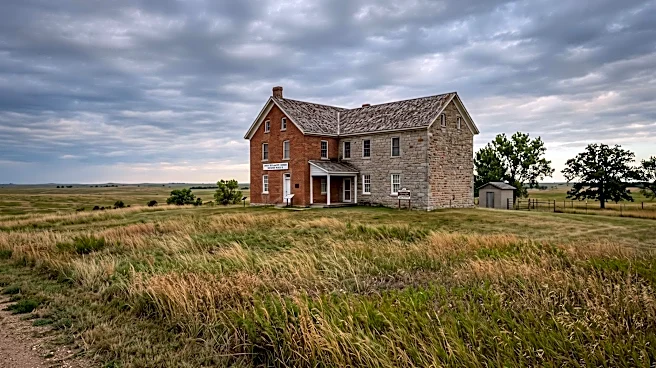
The Iowa, Sac, and Fox Mission Museum, located near Highland, Kansas, is now managed by the Iowa Tribe of Kansas and Nebraska. This development follows the return of the mission building and 10 acres of surrounding land to the tribe in 2021, after decades
of management by the Kansas Historical Society. The mission itself has a long history, established in 1837 by a Presbyterian couple after the federal government relocated the Iowa, Sac, and Fox tribes from Missouri to a reservation in northeastern Kansas. Its original purpose was to discourage tribal customs while providing education, teaching Christianity, industrial and homemaking skills, and farming to Native children. In 1845, the initial log schoolhouse was replaced by a three-story brick-and-limestone building, funded by the Iowa Tribe, the Bureau of Indian Affairs, and the Presbyterian Mission Society. This structure was frequently noted by emigrants traveling west along the California Trail.
Why It's Important?
The return of the Iowa, Sac, and Fox Mission site to the Iowa Tribe of Kansas and Nebraska is a significant event, symbolizing a step towards tribal sovereignty and self-determination. This transfer allows the tribe to reclaim and interpret a crucial part of their heritage, presenting their history and culture from their own perspective. Historically, the mission represented a period of forced assimilation, aiming to replace tribal ways with Western education and Christian values. By managing the museum, the Iowa Tribe can now educate the public about the complex history of their people, the impact of federal policies, and the resilience of their culture. This move also highlights broader efforts across the U.S. to return ancestral lands and cultural sites to Native American tribes, fostering reconciliation and empowering indigenous communities to preserve and share their narratives.
What's Next?
Under the management of the Iowa Tribe of Kansas and Nebraska, the Iowa, Sac, and Fox Mission Museum is expected to evolve its exhibits and educational programs to reflect the tribe's historical narrative and cultural perspectives. Future developments may include expanded interpretive displays, cultural events, and educational initiatives that delve deeper into the experiences of the Iowa, Sac, and Fox peoples. The tribe will likely continue to preserve the historic mission building, which is listed on the National Register of Historic Places, and the surrounding land, including a 30-yard wagon swale from the California Trail. This transition also sets a precedent for other historical sites with Native American significance, potentially encouraging similar land returns and tribal management across the country, fostering a more inclusive understanding of American history.
Beyond the Headlines
The story of the Iowa, Sac, and Fox Mission goes beyond a simple land transfer; it delves into profound themes of cultural identity, historical memory, and restorative justice. The mission's original intent to assimilate Native children represents a painful chapter in U.S. history, where indigenous cultures were systematically undermined. The tribe's current management of the museum offers a powerful counter-narrative, transforming a symbol of assimilation into a center for cultural revitalization and education. This shift allows for a more nuanced understanding of the past, acknowledging the resilience of Native American communities in the face of adversity. It also underscores the ongoing importance of indigenous voices in shaping historical interpretations and ensuring that the full scope of American history, including its difficult aspects, is accurately represented and understood by future generations.