




What's Happening?
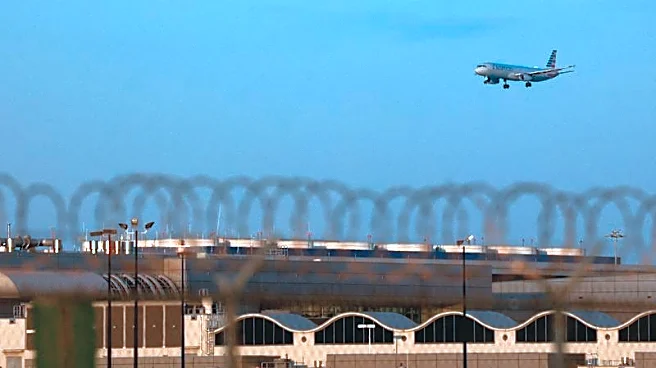
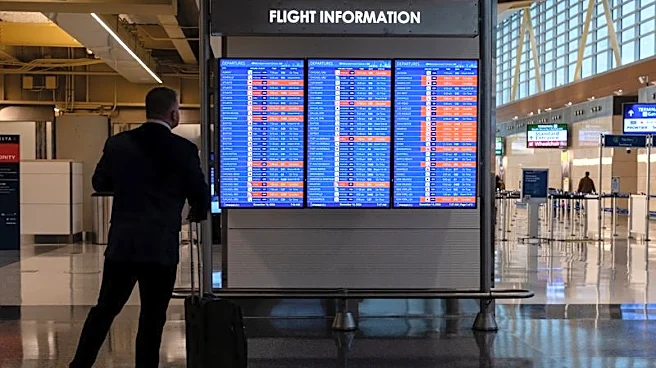
Trump administration officials experienced significant technical difficulties during a televised press conference aimed at addressing a nationwide ground stop across U.S. airspace. Secretary of Transportation Sean Duffy began speaking at the much-anticipated
event when a loud, echoing hum disrupted the audio. Despite attempts to resolve the issue, including Duffy stepping away and technicians scrambling to replace microphones, brittle feedback persisted. The embarrassing three-minute pause was broadcast live across U.S. networks. Duffy, visibly irritated, acknowledged the irony of a tech meltdown occurring during a discussion about a major flight disruption caused by aging technology. He was joined by Federal Aviation Administration head Bryan Bedford and the FAA's chief technology officer Rebecca Guy, who was participating in her first press conference.
Why It's Important?
This incident is important because it publicly underscored the very issue the press conference was meant to address: systemic problems with aging technology. The technical glitches during the briefing served as a stark, real-time illustration of the challenges faced by U.S. infrastructure. For the Trump administration, it highlighted the difficulty in conveying a message of competence and control when the medium itself fails. The public perception of the government's ability to manage critical national systems, such as air traffic control, can be significantly impacted by such visible failures. It also brings into focus the urgent need for investment and modernization in critical public services, as the consequences of outdated technology can range from minor inconveniences to major disruptions affecting thousands of citizens and the economy.
What's Next?
The immediate aftermath of this incident will likely involve increased scrutiny on the Department of Transportation and the FAA regarding their plans for technological upgrades. Secretary Duffy and Bryan Bedford have already pointed to ongoing systemic issues with transitioning from 1970s and 1980s air traffic control technology to more modern equipment. This public embarrassment may accelerate calls for funding and implementation of these modernization efforts. The incident could also prompt a review of technical preparedness for high-profile government communications. Public and congressional pressure may mount for concrete timelines and progress reports on updating critical infrastructure to prevent future widespread disruptions and to restore public confidence in the reliability of U.S. air travel systems.
Beyond the Headlines
Beyond the immediate technical failure, this event highlights a broader narrative about the challenges of governance in an era of rapid technological advancement. The symbolism of a government struggling with its own technology while trying to explain a technology-induced crisis is potent. It raises questions about the digital divide within government operations and the potential for such vulnerabilities to impact national security and economic stability. The incident could also fuel public skepticism about the government's capacity to manage complex technological transitions, potentially affecting trust in other large-scale public projects. It serves as a reminder that effective communication and operational reliability are intertwined, and failures in one can undermine confidence in the other.