
What's Happening?
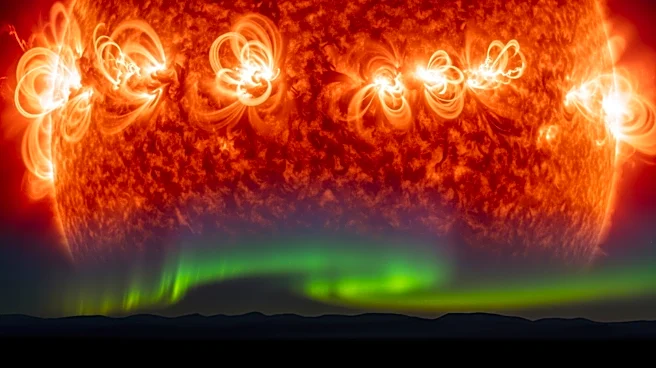
Three solar flares have erupted from the sun, potentially increasing the chances of seeing the northern lights across the United States. These flares, including an X1.0 flare, have launched coronal mass
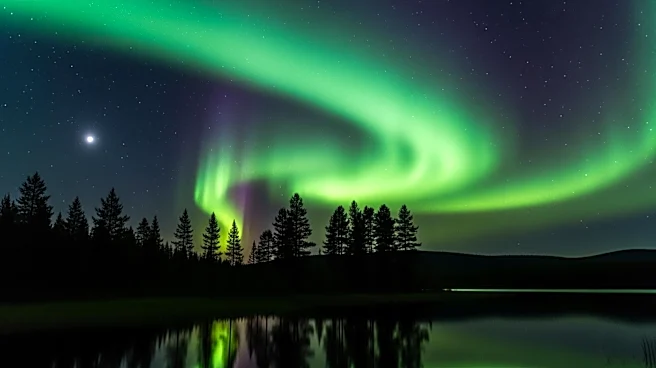
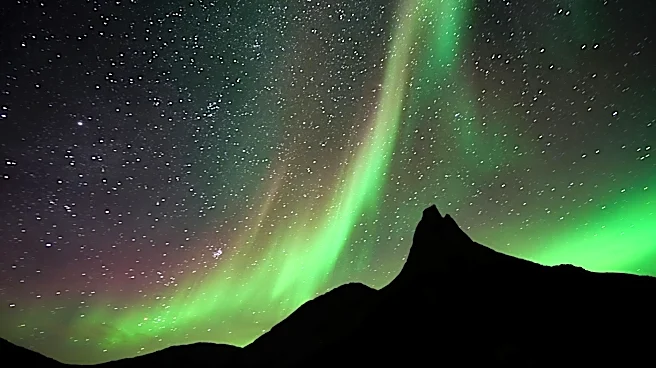
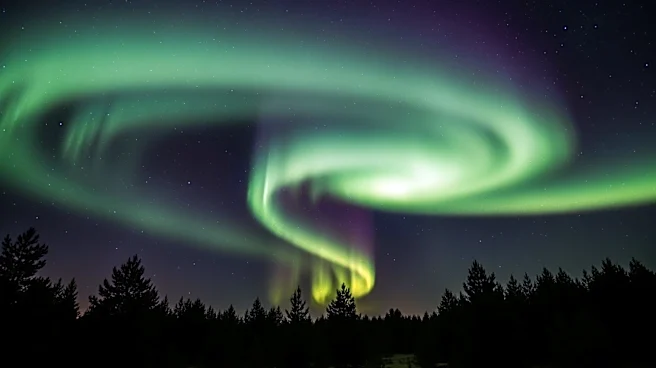
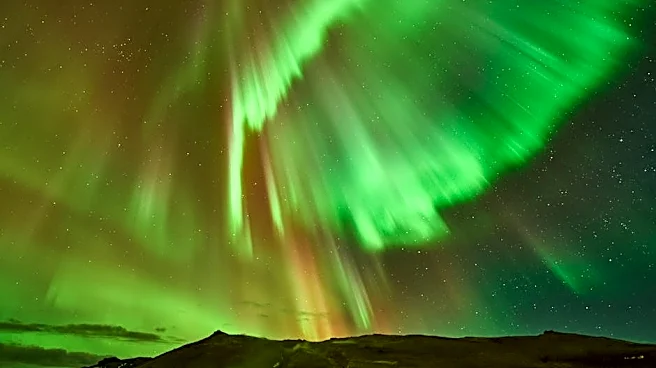
ejections (CMEs) toward Earth, which could cause geomagnetic storms. The National Weather Service's Space Weather Prediction Center predicts that these flares will combine before reaching Earth, potentially leading to a strong or severe geomagnetic storm. The northern lights, linked to geomagnetic storms, may be visible in areas not typically able to see them.
Why It's Important?
The potential visibility of the northern lights across a wide range of U.S. states is significant as it offers a rare opportunity for millions of Americans to witness this natural phenomenon. The geomagnetic storm could also have broader implications, such as affecting power systems, spacecraft operations, and navigation systems. Voltage corrections may be required, and false alarms could be triggered on some protection devices. Additionally, surface charging may occur on satellite components, and intermittent satellite navigation and low-frequency radio navigation problems may arise.
What's Next?
As the geomagnetic storm progresses, NOAA and other space weather agencies will continue to monitor its impact and provide updates. Skywatchers are advised to head to dark spots away from city lights to optimize viewing chances. The strongest geomagnetic activity is expected during the afternoon and overnight hours, between 2 p.m. and 5 p.m. ET on June 4 and between 8 p.m. and 11 p.m. ET on June 5. The visibility of the northern lights will depend on the intensity of the storm and local weather conditions.