




What's Happening?
Loyola University Maryland has been awarded approximately $2.22 million in grants from the Maryland Energy Administration (MEA). These funds are designated to support the installation of renewable energy infrastructure and planning initiatives across
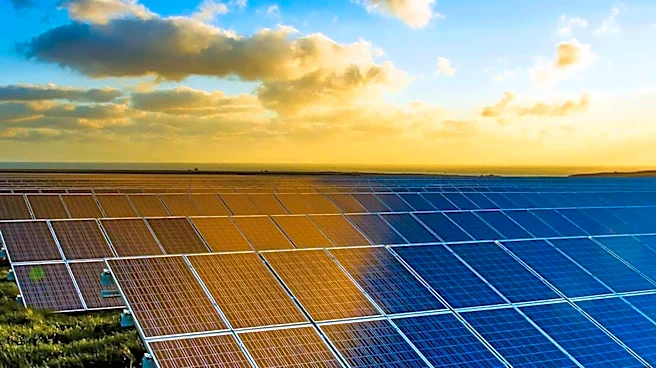
the university's campuses. Specifically, the grants will facilitate the installation of rooftop photovoltaic solar panels on the Fitness & Aquatic Center (FAC) and a solar canopy over the parking lot at 5104 York Road, which houses Loyola’s Community Hub and Center for Neighborhood Resilience. The university received $1.16 million from the MEA’s 2025 Higher Education Clean Energy Grant Program for the FAC solar installation and to guide the implementation of its Campus Clean Energy Master Plan (CCEMP). An additional $1.06 million was granted from the MEA’s 2026 program for the solar installation at the 5104 York Road property. These projects are part of Loyola's broader commitment to its Climate Action Plan and its 'Laudato Si’ commitment to care for our common home,' as stated by Helen Schneider, associate vice president for facilities and risk management.
Why It's Important?
This significant investment in renewable energy at Loyola University Maryland underscores a growing trend among U.S. educational institutions to adopt sustainable practices and reduce their carbon footprint. The grants not only provide direct financial support for clean energy infrastructure but also integrate sustainability into academic curricula and workforce development. The Campus Clean Energy Master Plan (CCEMP) will serve as a comprehensive framework, identifying key goals and strategies for Loyola's campus in alignment with Maryland's clean energy objectives. This includes on-campus and off-campus renewable generation, energy efficiency projects, and student engagement. The development of a new engineering course focused on clean energy, accessible to a wide range of students, will help cultivate a skilled workforce in the renewable energy sector, addressing a critical need in the evolving U.S. economy. Furthermore, the student internship bonus included in the grants offers practical, hands-on experience for students in the Office of Sustainability, preparing them for future roles in the clean energy industry.
What's Next?
Loyola University Maryland will proceed with the installation of solar panels on the Fitness & Aquatic Center and a solar canopy at 5104 York Road. The Campus Clean Energy Master Plan (CCEMP) will be further developed and implemented, outlining specific strategies for achieving the university's emissions reduction goals. This plan will encompass various clean energy approaches, including on-campus and off-campus renewable generation, energy efficiency initiatives, and student involvement. Additionally, a new 200-level engineering course, designed by Dr. Suzanne Keilson, chair and associate professor of engineering, will be developed and offered as an elective. This course aims to be broadly accessible to students across multiple disciplines, such as Environmental Science and Studies, Sustainability Management, and Global Studies. The university will also continue to fund student interns in the Office of Sustainability for the next three years, providing them with practical experience in the clean energy sector and supporting the CCEMP's implementation.
Beyond the Headlines
The initiative at Loyola University Maryland extends beyond immediate energy savings and emissions reductions, fostering a deeper integration of sustainability into the university's operational and academic fabric. By installing solar canopies, the project also addresses urban heat island effects, providing shade and contributing to local environmental improvements. The emphasis on developing a new engineering course and offering student internships highlights a proactive approach to preparing the next generation for careers in the green economy. This holistic strategy, supported by state grants, positions Loyola as a leader in sustainable higher education, potentially influencing other institutions to adopt similar comprehensive approaches. The 'Laudato Si’ commitment underscores an ethical and moral dimension to environmental stewardship, integrating faith-based principles with practical climate action. This blend of technological advancement, educational innovation, and ethical responsibility creates a model for how institutions can contribute to broader societal goals of sustainability and climate resilience.