


What's Happening?
President Trump has signed an executive order aimed at narrowing the eligibility for birthright citizenship in the United States. This principle, which grants citizenship to nearly all individuals born on U.S. soil, has been in place since the end of
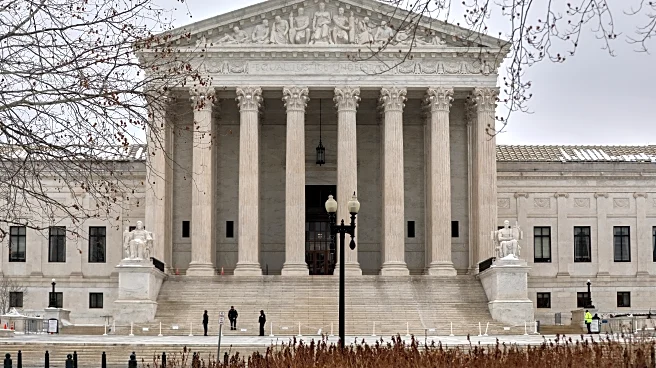
the Civil War. The Supreme Court is set to hear the case, which could have significant implications for U.S. citizenship laws. The executive order seeks to redefine who qualifies for citizenship, potentially affecting new immigrants, their children, and native-born citizens. The case is scheduled for a hearing on Wednesday, with outcomes that could reshape the legal landscape of citizenship in the U.S.
Why It's Important?
The challenge to birthright citizenship represents a major shift in U.S. immigration policy and could have far-reaching consequences for millions of individuals. If the Supreme Court upholds the executive order, it could lead to changes in the interpretation of the 14th Amendment, which guarantees citizenship to all persons born or naturalized in the United States. This could impact the status of children born to non-citizen parents and alter the demographic composition of the country. The case highlights the ongoing debate over immigration policy and the balance between national sovereignty and individual rights.
What's Next?
The Supreme Court's decision will be closely watched, as it could set a precedent for future cases involving citizenship and immigration. Depending on the outcome, there may be legislative efforts to address the implications of the ruling, either by reinforcing or challenging the executive order. Advocacy groups on both sides of the issue are likely to mobilize, with potential protests and campaigns to influence public opinion and policy. The decision could also become a focal point in the political arena, influencing debates and elections in the coming years.