





What's Happening?
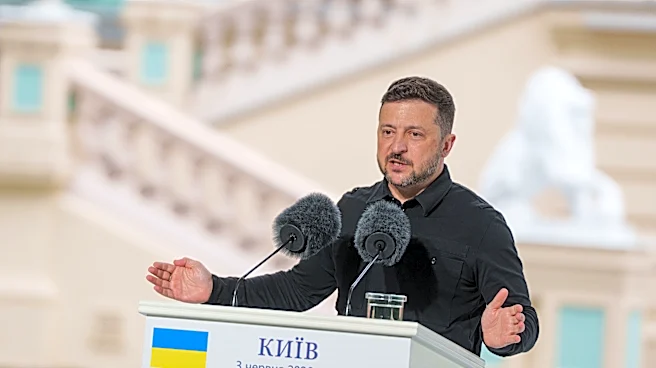
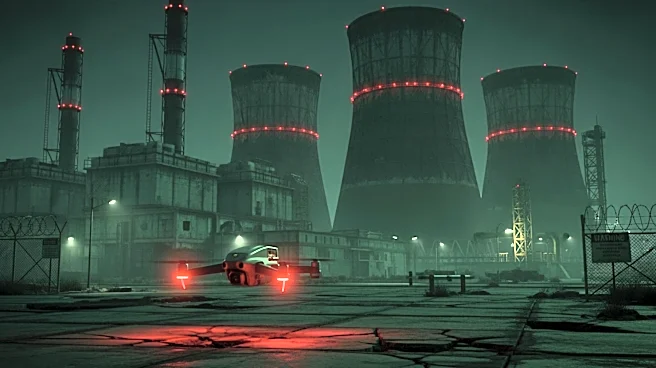
Russian forces have reportedly attacked a storage facility for spent nuclear fuel near Ukraine’s Chornobyl power plant, according to Ukrainian President Volodymyr Zelenskyy. The attack, which occurred on June 7, 2026, significantly damaged a fuel-reception
building close to where large amounts of nuclear material are stored. The International Atomic Energy Agency (IAEA) confirmed that it had been briefed by Ukraine about the incident. Despite the damage, there was no spike in radiation levels, and no spent fuel was stored in the building at the time. The fire resulting from the attack was extinguished, and no injuries were reported. Russia has not commented on the alleged strike. This incident is part of a series of Russian attacks on Ukrainian infrastructure since the full-scale invasion began in 2022.
Why It's Important?
The attack on a nuclear facility near Chornobyl underscores the ongoing risks associated with military actions in regions with sensitive infrastructure. The Chornobyl site is historically significant due to the catastrophic nuclear disaster in 1986, and any damage to facilities in this area raises international safety concerns. The incident highlights the potential for environmental and human safety risks in conflict zones, particularly when nuclear materials are involved. It also reflects the broader geopolitical tensions between Russia and Ukraine, with potential implications for international diplomatic relations and security policies. The attack could influence global nuclear safety protocols and prompt discussions on safeguarding nuclear sites in conflict areas.
What's Next?
The IAEA has announced plans to send a team to inspect the impact of the attack on the Chornobyl site. This inspection will likely assess the structural integrity of the damaged building and evaluate any potential risks to nuclear safety. Meanwhile, Ukrainian President Zelenskyy is set to meet with leaders from France, Germany, and the UK to discuss strategies for increasing pressure on Russia. These discussions may lead to further international sanctions or diplomatic actions aimed at curbing Russian aggression. The ongoing conflict and its impact on nuclear safety will remain a critical focus for international policymakers and security experts.