



What's Happening?
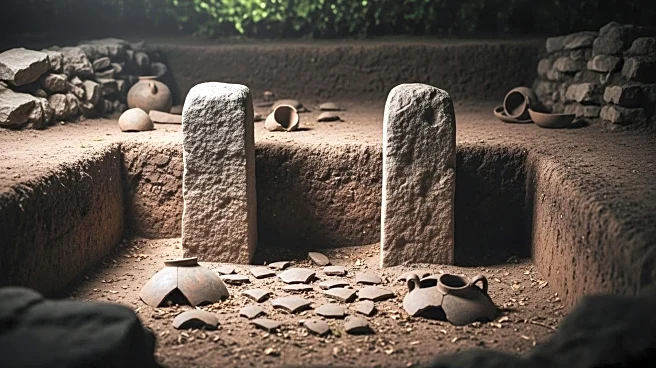
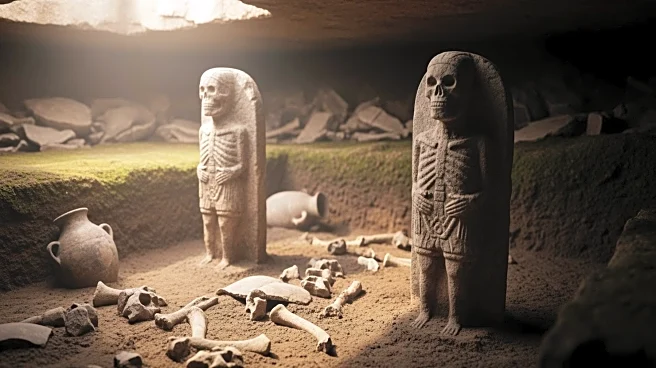
In Dijon, France, archaeologists have uncovered a series of ancient skeletons buried in an upright position. These discoveries, found near a primary school, are believed to date back to the Gauls, a Celtic group from around 300BC to 200BC. The unusual
burial method, with bodies seated and facing west, has puzzled scientists, who are investigating whether these individuals were buried alive or if the positioning held cultural significance.
Why It's Important?
The discovery of these upright skeletons provides valuable insights into the burial practices and cultural beliefs of the ancient Gauls. Understanding these practices can shed light on the social and religious structures of the time. The findings also contribute to the broader field of archaeology by challenging existing theories and prompting new research into ancient European civilizations.
What's Next?
Researchers will continue to analyze the skeletons and the surrounding site to gather more information about the Gauls' burial customs. This may involve advanced techniques such as DNA analysis or isotopic studies to determine the origins and lifestyles of the individuals. The findings could lead to further excavations in the area, potentially uncovering more about the Gauls' way of life.
Beyond the Headlines
The discovery raises questions about the ethical considerations of archaeological excavations, particularly in areas close to modern communities. Balancing the preservation of historical sites with the needs of local populations is a challenge that archaeologists must navigate. Additionally, the findings may influence how ancient European history is taught, emphasizing the diversity and complexity of early societies.