


What's Happening?
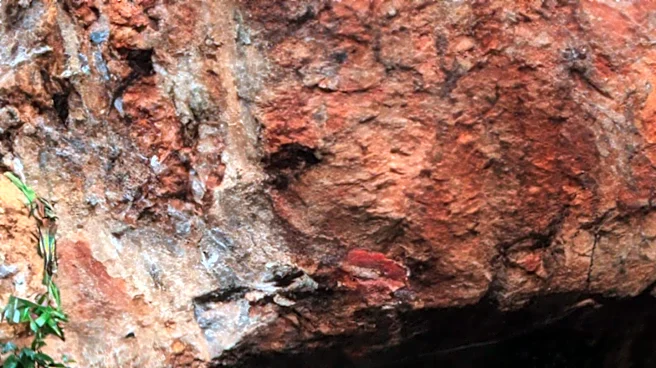
Researchers have uncovered that the ancient Huashan Rock Art in southern China was created using a mixture that included human blood, specifically from women who had just given birth. This discovery was made after analyzing samples from the rock art,
which dates back over 2,000 years. The use of blood, along with lime and red clay, contributed to the durability of the paintings, which have withstood harsh environmental conditions. The findings suggest that the blood may have been used for its symbolic significance related to fertility and regeneration, as well as its chemical properties.
Why It's Important?
This discovery provides a deeper understanding of the cultural and technical sophistication of ancient societies. The use of human blood in the Huashan Rock Art highlights the symbolic and ritualistic practices of the Luoyue people, offering insights into their social and religious beliefs. The findings challenge previous assumptions about the creation of prehistoric art, emphasizing the technical knowledge required to produce long-lasting works. This research contributes to the broader field of archaeology by demonstrating the complex interplay between cultural practices and technological innovation in ancient times.