
What's Happening?
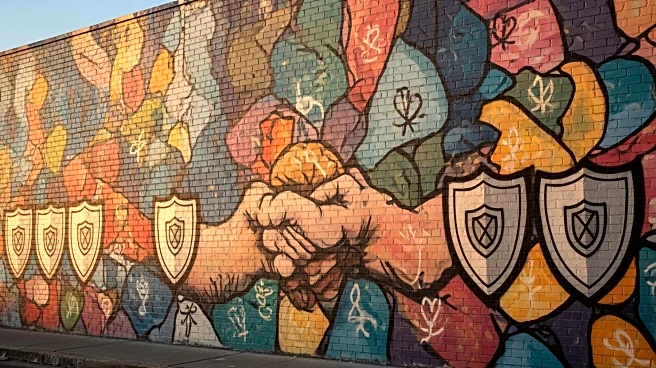
Johanna Toruño, a Salvadoran-born queer artist, is using her street art to address the fears and challenges faced by Latino communities amid increased federal immigration enforcement in Los Angeles. Her
work, part of the Unapologetic Street Series, transforms city walls into platforms for political expression and community solidarity. Toruño's art, which includes bold posters with messages of protection and resistance, has gained prominence as a voice for dignity and survival in the face of deportations and targeted arrests. Her posters, which have appeared in cities like New York and Bologna, Italy, aim to make political art accessible and embedded in the communities they address.
Why It's Important?
Toruño's work is significant as it provides a form of resistance and visibility for Latino communities affected by aggressive immigration enforcement. Her art serves as a public declaration of solidarity, offering a sense of community and support in a climate of fear and uncertainty. By using public spaces as her canvas, Toruño challenges the status quo and encourages dialogue about immigration and queer identity. Her efforts highlight the power of art to influence social change and provide a voice for marginalized groups, making her work an essential part of the cultural and political landscape in Los Angeles.
What's Next?
As federal immigration operations continue to impact communities, Toruño's art is likely to remain a vital tool for advocacy and awareness. Her ongoing projects and community events will continue to foster dialogue and support for those affected by deportations. The evolving political climate may influence the themes and urgency of her work, but her commitment to using art as a means of resistance and community building is expected to persist. Toruño's future endeavors may also include expanding her reach to other cities and collaborating with other artists and activists to amplify her message.
Beyond the Headlines
Toruño's art not only addresses immediate concerns but also explores deeper themes of identity, belonging, and resilience. Her work reflects the experiences of the Salvadoran diaspora and the broader immigrant community, offering a narrative of survival and hope. By situating her art in public spaces, Toruño challenges traditional notions of art consumption and accessibility, making her work a part of everyday life for those who encounter it. Her approach underscores the importance of art as a tool for social justice and cultural expression, inspiring others to use creative means to address societal issues.