





What's Happening?
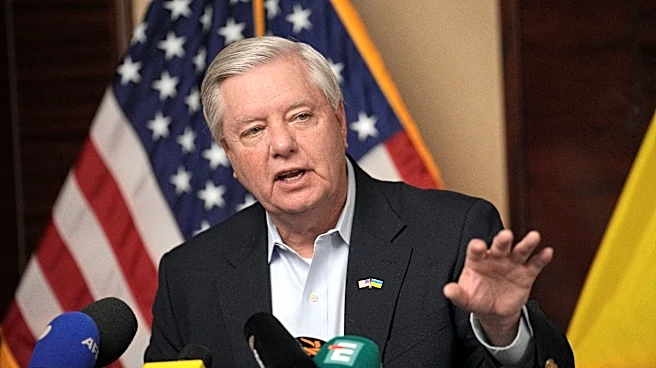
Senator Lindsey Graham, a Republican from South Carolina and a prominent ally of President Trump, has died following a brief and sudden illness. His office announced the news, marking the end of a significant political career. Graham was known for his
strong support of President Trump and his influential role in the Senate. His passing leaves a vacancy in the Senate and raises questions about the future political landscape in South Carolina.
Why It's Important?
Graham's death is a significant event in U.S. politics, particularly for the Republican Party. As a key figure in the Senate, his absence will be felt in legislative processes and party dynamics. His passing may lead to a special election to fill his seat, potentially altering the balance of power in the Senate. Additionally, Graham's close ties to President Trump and his role in shaping Republican policies make his death a pivotal moment for the party's future direction.
What's Next?
In the wake of Graham's death, attention will turn to the process of filling his Senate seat. South Carolina's governor may appoint a temporary replacement, but a special election is likely to follow. This election will be closely watched as it could influence the Senate's composition and the Republican Party's strategy moving forward. Political leaders and constituents will be considering potential candidates and the implications of this change in representation.