






What's Happening?
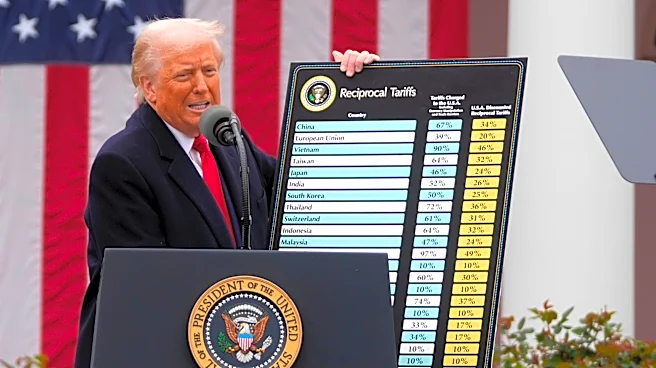
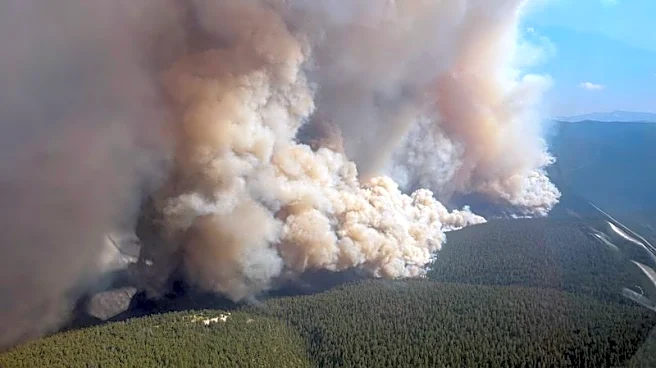
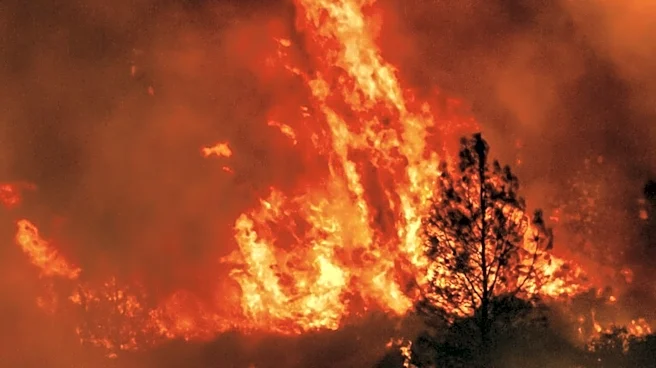
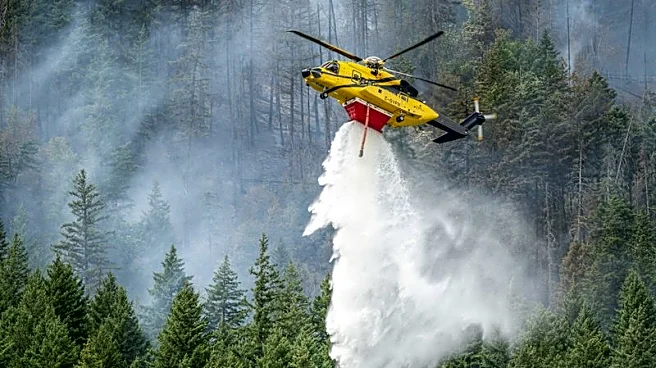
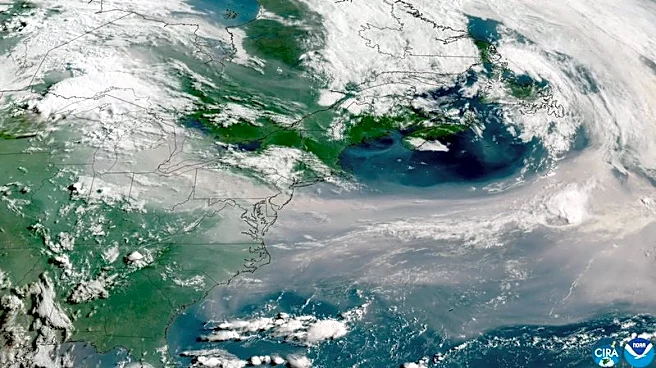
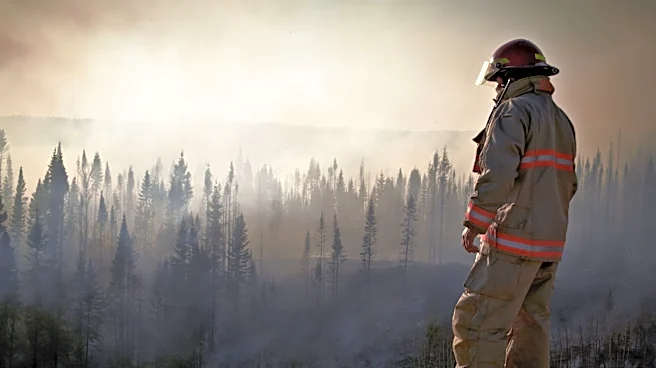
President Trump has announced a potential imposition of new tariffs on Canada in response to the hazardous air quality caused by Canadian wildfires. The smoke from these fires has affected air quality across several U.S. states, including Minnesota and
North Carolina, with Washington, D.C. experiencing one of the worst air quality indexes globally. Trump criticized Canada for not managing its forests properly, labeling the situation as 'willful negligence.' In support of Trump's stance, Rep. John James and Sen. Bernie Moreno are advocating for legislation to impose a 25% fee on Canadian imports. The proposed tariffs aim to fund a victim compensation fund and cleanup efforts. Health officials have issued warnings to residents in affected areas to stay indoors due to the health risks posed by the smoke.
Why It's Important?
The proposed tariffs highlight the ongoing tensions between the U.S. and Canada regarding environmental management and cross-border pollution. If implemented, these tariffs could strain trade relations and impact economic activities between the two countries. The situation underscores the broader issue of international accountability in environmental crises and the economic implications of such natural disasters. The tariffs could also set a precedent for how countries address transboundary environmental issues, potentially leading to more stringent international environmental policies.
What's Next?
If the tariffs are imposed, Canada may respond with its own economic measures, potentially leading to a trade dispute. The U.S. Congress will likely debate the proposed legislation, and its outcome could influence future U.S.-Canada relations. Additionally, the situation may prompt discussions on international environmental agreements and the responsibilities of countries in managing natural resources to prevent cross-border impacts.