



What's Happening?
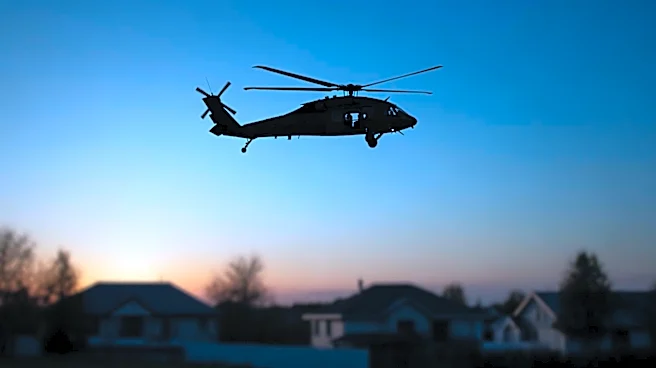
U.S. Defense Secretary Pete Hegseth announced the lifting of suspensions for two U.S. Army helicopter pilots who flew near entertainer Kid Rock's home in Nashville. The incident, which involved the helicopters hovering near Kid Rock's swimming pool, initially
led to the pilots' suspension as the Army reviewed the mission's compliance with FAA regulations and safety protocols. Kid Rock, a known supporter of President Trump, expressed his approval of the military presence, noting his support for the troops and his past performances for them overseas. The helicopters were on a training mission and also flew over a protest against Trump in downtown Nashville, though their presence was unrelated to the protest.
Why It's Important?
The incident highlights the intersection of military operations and civilian life, particularly when involving high-profile individuals like Kid Rock. The quick resolution and lifting of suspensions suggest a lenient approach by the military in this case, possibly influenced by Kid Rock's public support for the military and President Trump. This decision may set a precedent for how similar incidents are handled in the future, balancing military training needs with public perception and media attention. The event also underscores the ongoing relationship between public figures and military personnel, which can influence public opinion and policy discussions.
What's Next?
The Army's review of the incident may lead to updated protocols for military flights in civilian areas, especially near residences of public figures. The outcome could influence future military training missions and their interaction with civilian spaces. Additionally, the public and media response to the incident may prompt discussions on the appropriateness of military displays in non-military settings, potentially affecting future military-civilian engagements.