





What's Happening?
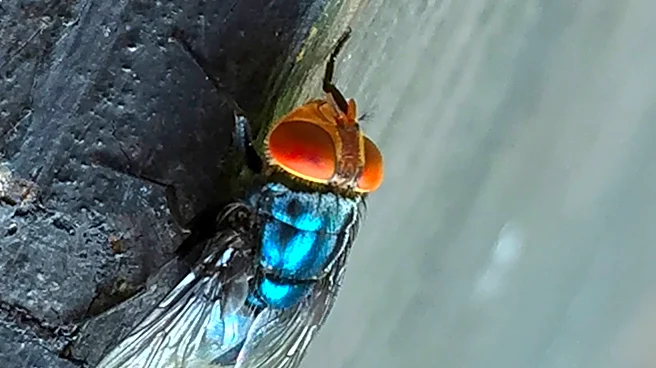
The U.S. Department of Agriculture (USDA) has announced a suspected case of New World screwworm in South Texas, which could be the first confirmed case in the United States. The screwworm, a parasitic fly, poses a significant threat to the livestock industry,
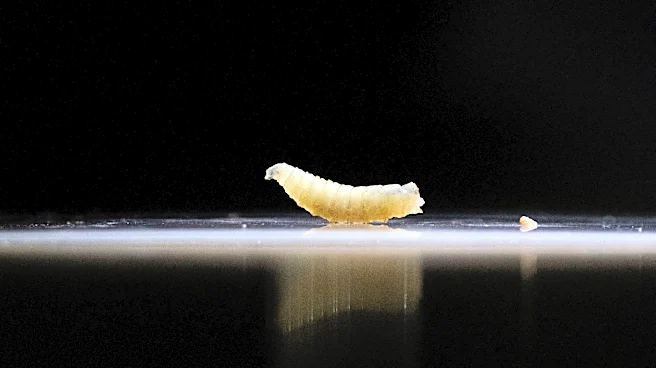
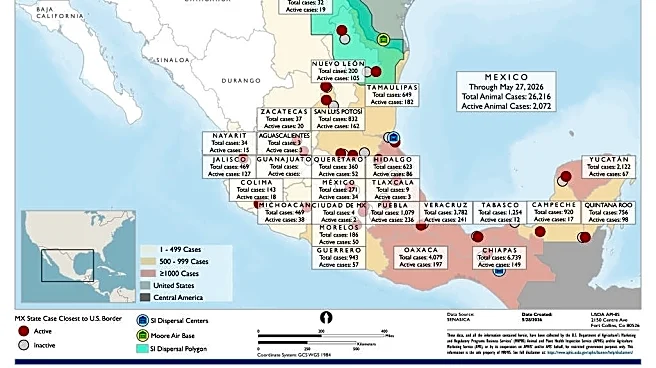
particularly cattle, by embedding larvae in open wounds of warm-blooded animals. This infestation can lead to severe wounds or death. The USDA is currently testing samples from two calves in La Pryor, Texas, at its National Veterinary Services Laboratories in Iowa. The agency has activated personnel on the ground and is collaborating with local partners to address the situation. Historically, screwworm was eradicated in the U.S. in the 1960s but has re-emerged in Central America and Mexico in recent years.
Why It's Important?
The potential confirmation of screwworm in Texas could have severe economic implications, particularly for the state's $15 billion cattle industry. The parasite's presence could lead to significant livestock losses and economic damage, estimated at $1.8 billion for Texas alone. The USDA's proactive measures, including shutting down the southern border to live animal imports and collaborating with Mexico and Panama to use sterile fly methods, aim to prevent the spread of screwworm. The situation underscores the importance of biosecurity measures and international cooperation in managing agricultural pests that threaten economic stability and food security.
What's Next?
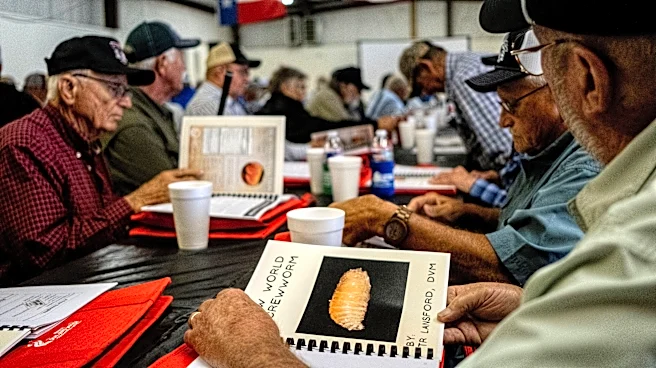
If the screwworm case is confirmed, the USDA and state officials will likely intensify efforts to contain and eradicate the parasite. This may involve expanding sterile fly production and dispersal facilities, as well as increasing surveillance and quarantine measures. The situation may prompt further collaboration with international partners to prevent the spread of screwworm across borders. Local, state, and federal agencies will need to coordinate closely to protect the livestock industry and mitigate economic impacts. Ongoing communication with the public and stakeholders will be crucial to ensure effective response and management strategies.