



What's Happening?
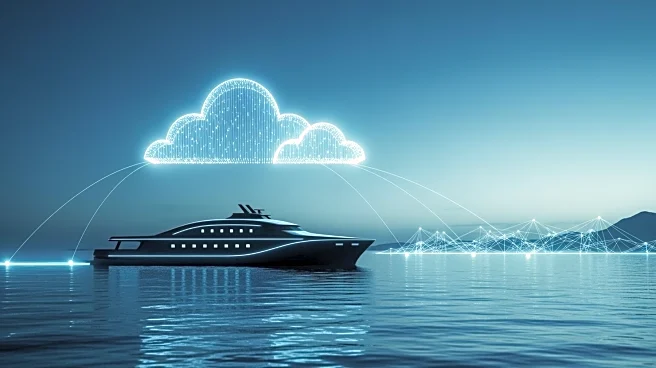
Contemporary Amperex Electric Vessel (CAEV), a subsidiary of CATL, has introduced a groundbreaking 'ship-shore-cloud' solution aimed at revolutionizing the zero-carbon shipping industry. This innovative system was unveiled at Marintec China 2025 and is designed
to integrate the entire chain of ship operations, from on-board power systems to shore-based energy replenishment and cloud-based management. The solution addresses several challenges faced by the industry, such as high initial costs, insufficient energy infrastructure, and complex water conditions. By integrating battery systems, power systems, and intelligent navigation, the solution ensures stable and long-distance ship operations. Additionally, the shore-side infrastructure, including a charging and battery-swapping network, alleviates energy replenishment concerns. The cloud component, featuring the 'Yunfan' management platform and 'Beichen' navigation system, allows for remote monitoring and optimization of ship operations.
Why It's Important?
The introduction of the 'ship-shore-cloud' solution by CATL is a significant advancement in the maritime industry, particularly in the context of global efforts to reduce carbon emissions. By providing a comprehensive and integrated approach to electric vessel operations, this solution could lead to increased adoption of electric ships, thereby reducing the maritime sector's carbon footprint. The ability to remotely monitor and optimize ship operations can enhance efficiency and reduce operational costs, making electric vessels more economically viable. This development aligns with broader environmental goals and could influence regulatory policies aimed at promoting sustainable shipping practices. Stakeholders in the shipping industry, including shipbuilders, operators, and port authorities, stand to benefit from the increased efficiency and reduced environmental impact.
What's Next?
As CATL's 'ship-shore-cloud' solution gains traction, it is likely to spur further innovation and investment in the electric vessel sector. The success of this integrated approach could lead to the development of similar solutions by other companies, fostering competition and technological advancements. Regulatory bodies may also consider implementing policies that encourage the adoption of such technologies, potentially leading to new standards for zero-carbon shipping. Additionally, the expansion of the necessary infrastructure, such as charging and battery-swapping stations, will be crucial to support the widespread use of electric vessels. The maritime industry will need to collaborate with governments and technology providers to ensure the successful implementation and scaling of these solutions.