







What's Happening?
U.S. Representative Laurel M. Lee has engaged in stock trading activities, specifically making two sales of $BAC stock within the last six months, with no reported purchases. The total value of these sales was up to $115,000. These transactions occurred
on August 24 and June 2. This information is part of broader data tracking congressional stock trading, which indicates that members of Congress have collectively traded $BAC stock three times in the past six months, with all three instances being sales and no purchases. Another Representative, James A. Himes, also sold up to $15,000 on July 20. This data is made available through platforms that monitor congressional stock trades, providing transparency into the financial activities of elected officials. The broader market context for $BAC shows that Renaissance Technologies LLC recently opened a new $351.3 million position in the stock, as per an SEC 13F filing, reflecting their holdings for the September 30, 2026, report period. Analysts have also issued price targets for $BAC, with a median target of $66.0 from seven analysts over the last six months.
Why It's Important?
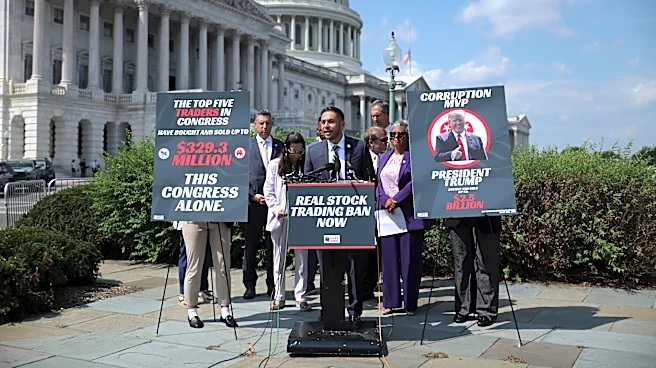
Congressional stock trading is a subject of significant public and ethical scrutiny in the U.S. The financial transactions of elected officials, particularly when they involve stocks of companies that could be affected by legislative decisions, raise concerns about potential conflicts of interest and the use of non-public information for personal gain. While there is no indication of impropriety in Representative Lee's specific trades, the transparency provided by tracking these activities is crucial for maintaining public trust in government. The fact that all recent congressional trades in $BAC were sales, with no purchases, could be interpreted in various ways, from personal financial planning to a cautious outlook on the stock. For financial markets, congressional trading data, alongside institutional investor activity like that of Renaissance Technologies LLC, offers another layer of insight into market sentiment and potential trends, though it is generally not a primary driver of market movements. The ongoing debate about whether members of Congress should be allowed to trade individual stocks underscores the importance of these disclosures.
What's Next?
The ongoing monitoring of congressional stock trading will continue to provide transparency into the financial activities of U.S. lawmakers. Public and media scrutiny of these trades is likely to persist, especially as discussions around potential reforms to congressional stock trading rules continue. There may be further legislative efforts to restrict or ban individual stock trading by members of Congress, aiming to eliminate even the appearance of conflicts of interest. For Representative Lee and other lawmakers, future financial disclosures will be closely watched. The broader market for $BAC will continue to be influenced by institutional investments, analyst ratings, and overall economic conditions. The transparency provided by platforms tracking these trades will remain a key tool for accountability and public oversight, informing debates about ethical conduct in public service.
Beyond the Headlines
The issue of congressional stock trading delves into the fundamental principles of public service and ethical governance. The ability of lawmakers to trade individual stocks, even with disclosure requirements, creates a perception of an uneven playing field, where those with access to privileged information might benefit financially. This perception erodes public trust and fuels cynicism about the integrity of political institutions. The debate extends beyond mere legality to the ethical standard expected of public officials. A complete ban on individual stock trading for members of Congress, as advocated by some, would aim to remove any potential for conflicts of interest, real or perceived. Such a move would signify a shift towards a higher ethical bar for elected officials, emphasizing their role as public servants rather than private investors. This ongoing discussion reflects a broader societal demand for greater transparency and accountability from those in power, highlighting the tension between individual financial freedom and the demands of public trust.