








What's Happening?
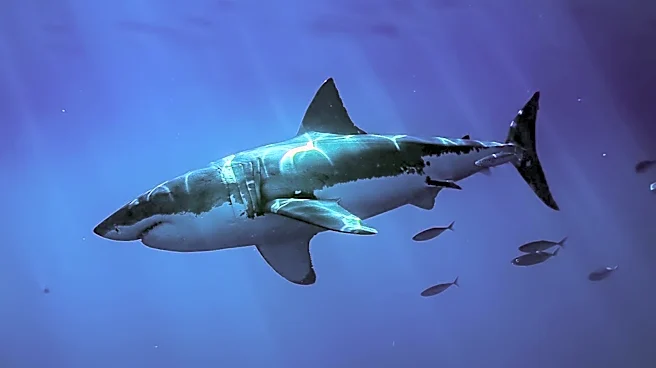
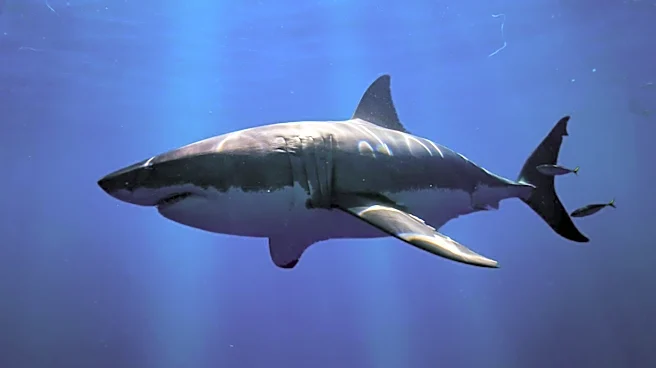
A great white shark was captured on camera off the coast of Block Island, Rhode Island, marking what the Atlantic Shark Institute believes may be the first time such footage has been recorded in the state's waters. The sighting occurred during a search
for a drifting humpback whale carcass, which had attracted the shark. The mission, led by Jon Dodd, Executive Director of the Atlantic Shark Institute, and Sarah Callan, Manager of the Animal Rescue Program at Mystic Aquarium, involved tracking the 40-foot whale carcass. The team documented an estimated 8-foot great white shark feeding on the remains, capturing rare underwater footage of the event. This sighting is considered significant due to the rarity of white shark appearances in the area, which typically occur when a whale dies.
Why It's Important?
The documentation of a great white shark in Rhode Island waters is significant for marine research and conservation efforts. It highlights the presence of these apex predators in areas where they are not commonly observed, providing valuable data for understanding their behavior and migration patterns. This event could influence local marine policies and conservation strategies, as it underscores the importance of monitoring marine life and maintaining ecological balance. Additionally, the sighting may impact public awareness and safety measures regarding shark activity in the region, potentially affecting tourism and local economies dependent on beach activities.
What's Next?
Following this rare sighting, the Atlantic Shark Institute and other marine research organizations may increase monitoring efforts in the area to gather more data on shark activity. This could involve deploying additional tracking devices and conducting further studies on the local marine ecosystem. The findings may lead to enhanced safety protocols for beachgoers and adjustments in local wildlife management policies. Public education campaigns could also be initiated to inform residents and visitors about shark behavior and safety measures, aiming to reduce potential human-shark interactions.