





What's Happening?
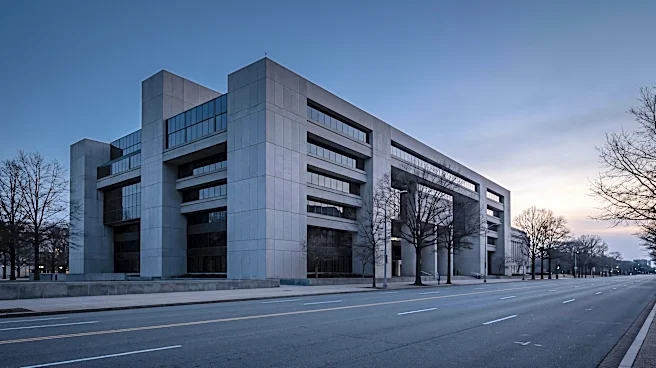
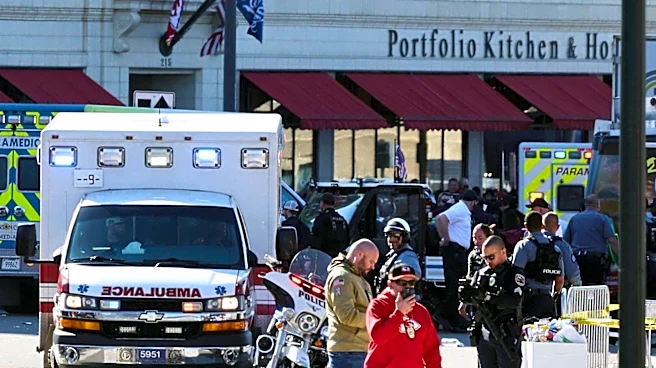
The Los Angeles Police Department (LAPD) bomb squad was dispatched to the Edward R. Roybal Federal Building in downtown Los Angeles following the discovery of a suspicious item. Federal agents contacted the LAPD around 12:30 a.m. regarding the device
located at 255 E. Temple Street. A police robot was observed examining belongings outside the federal building. The LAPD confirmed that no threats were associated with the item, and the scene was cleared by Wednesday morning. The investigation led to the closure of Alameda Street from Commercial Street to Temple Street for several hours, with all streets reopening by 5 a.m. Additionally, Los Angeles County Metropolitan Transportation Authority A-line trains between the Little Tokyo/Arts District and Union stations were temporarily replaced by bus shuttles due to the police activity. No further details regarding the suspicious item or the investigation have been released.
Why It's Important?
This incident highlights the ongoing security concerns surrounding federal buildings and critical infrastructure in major U.S. cities. The rapid response by the LAPD bomb squad underscores the seriousness with which law enforcement addresses potential threats, even when no explicit danger is ultimately found. Such events can cause significant disruption to urban life, affecting transportation, daily commutes, and local businesses due to street closures and public transit alterations. For federal agencies, these incidents necessitate robust security protocols and continuous vigilance to protect personnel and sensitive operations. The temporary suspension of train services and road closures also demonstrate the broader societal impact, emphasizing the need for efficient emergency response and communication to minimize inconvenience and maintain public order. The lack of associated threats in this particular case is reassuring, but the incident serves as a reminder of the constant need for preparedness against potential security breaches.
What's Next?
While the immediate scene has been cleared and no threats were found, the LAPD's investigation into the suspicious item is likely to continue to determine its origin and purpose. Authorities will probably review surveillance footage and gather any available evidence to understand how the item came to be placed near the federal building. This could lead to enhanced security measures around the Edward R. Roybal Federal Building and other federal facilities in Los Angeles. The Los Angeles County Metropolitan Transportation Authority will also need to ensure that A-line train services are fully restored and assess any lingering impacts on their operations. Public awareness campaigns regarding suspicious packages or activities might also be reinforced to encourage citizens to report anything unusual, contributing to collective security efforts. The incident may also prompt internal reviews of security protocols by federal agencies to identify any vulnerabilities.
Beyond the Headlines
The incident at the Edward R. Roybal Federal Building, while ultimately non-threatening, touches upon the broader psychological impact of security alerts in a post-9/11 era. Even false alarms can contribute to a heightened sense of anxiety and vigilance within the public and among government employees. It also underscores the significant resources, both human and technological, that are routinely deployed to address potential security risks, ranging from bomb squads and specialized robots to extensive street closures and public transportation rerouting. This constant state of readiness, though costly, is deemed essential for national security. Furthermore, the incident implicitly raises questions about the balance between maintaining public access to government facilities and implementing stringent security measures. The ongoing evaluation of technologies like GEB software with supervisory control by the GSA, as mentioned in a related context, suggests a continuous effort to enhance building performance and security through advanced solutions, indicating a proactive approach to managing and mitigating risks in federal infrastructure.