




What's Happening?
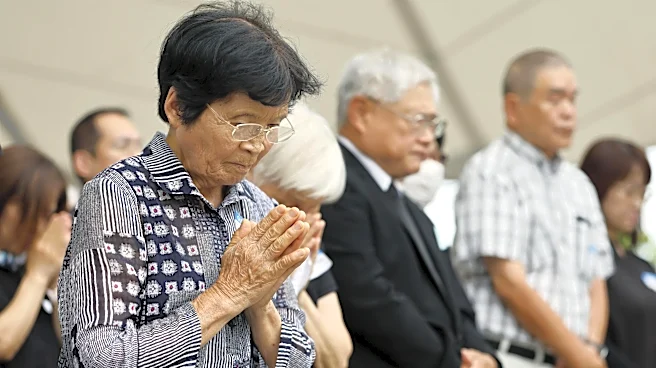
During a memorial ceremony marking the anniversary of the U.S. atomic bombing of Nagasaki, Mayor Shiro Suzuki declared that 'humanity and nuclear weapons cannot coexist.' The event, held at Nagasaki Peace Park, was attended by ultraconservative Prime
Minister Sanae Takaichi. The mayor's statement comes amid ongoing debates in Japan about the country's nuclear policy, as regional tensions rise and the government considers revising its defense strategy. The ceremony served as a platform for reaffirming Japan's commitment to peace and nuclear disarmament, despite the challenges posed by current geopolitical dynamics.
Why It's Important?
The mayor's declaration underscores the ethical and humanitarian concerns surrounding nuclear weapons, particularly in a country that has experienced their devastating effects firsthand. As Japan navigates its defense policy amid regional tensions, the debate over nuclear weapons highlights the broader global struggle between maintaining security and pursuing disarmament. The outcome of Japan's policy decisions could influence international efforts toward nuclear non-proliferation and impact its diplomatic relations, especially with countries advocating for disarmament.
What's Next?
Japan's government is expected to continue its internal debate on nuclear policy, with potential implications for its defense strategy and international relations. The upcoming Treaty on the Prohibition of Nuclear Weapons review conference will be a critical platform for Japan to clarify its stance. The government faces pressure from both domestic anti-nuclear advocates and international allies to maintain its non-nuclear principles. The outcome of this debate could lead to policy shifts that might affect Japan's participation in international treaties related to nuclear weapons and its security alliance with the United States.
Beyond the Headlines
The debate over nuclear weapons in Japan raises ethical and cultural questions about the country's identity and its commitment to peace. The potential shift in policy is seen by some as a departure from the values that have defined Japan's post-war era. Survivors of the atomic bombings, known as hibakusha, have been vocal in their opposition to any policy changes that would allow nuclear weapons in Japan, highlighting the moral implications of such a decision. The discussion also reflects broader global concerns about nuclear proliferation and the risks associated with nuclear deterrence strategies.