


What's Happening?
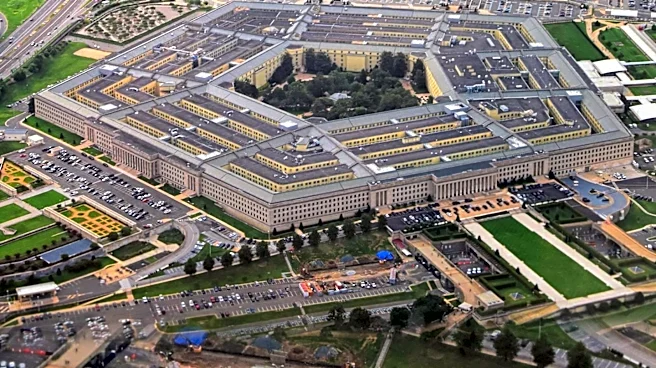
General (Ret.) Christopher Cavoli, former NATO Supreme Allied Commander Europe, stated that the U.S. is no longer structurally positioned to assist in every global conflict. Speaking at the Israel Private Markets Summit, Cavoli identified three critical
trends shaping the current threat landscape: traditional adversaries like Iran, Russia, China, and North Korea are increasingly collaborating on the battlefield; cheap commercial technology is enabling limited countries and groups to conduct long-range, precise strikes, making defense more costly; and international institutions that once managed state friction have lost authority, leaving nations feeling more isolated. Cavoli emphasized that the Ukraine conflict exposed the Western industrial base's unreadiness, as modern warfare consumes munitions faster than they can be produced. He noted that the U.S. military was designed to handle one major regional conflict at a time.
Why It's Important?
Cavoli's assessment signals a significant shift in global defense strategy and U.S. foreign policy. The inability of the U.S. to intervene in every conflict necessitates that allies develop greater self-sufficiency in defense. This will likely lead to increased defense spending and industrial capacity building among U.S. allies, particularly in Europe and other strategic regions. The rise of cheap, precise commercial technology as a military tool democratizes warfare, posing new challenges for advanced militaries that rely on expensive, exquisite systems. The erosion of international institutions further destabilizes global security, potentially leading to more localized conflicts and a greater burden on individual nations to protect their interests. This shift could reshape alliances and defense partnerships, with a stronger emphasis on regional security cooperation and shared technological development.
What's Next?
Cavoli outlined four key capabilities that U.S. allies will need to develop: end-to-end intelligence systems, including space-based collection; deep precision strike and targeting; interoperable command and control systems; and more abundant ballistic missile defense. He warned that Russia could rebuild its ground forces and pose a threat to Europe within four to six years, while China's timeline is less clear. The U.S. and its allies are expected to foster a new relationship between governments and defense suppliers, moving away from the traditional cost-plus model to one where companies develop products first and iterate with military feedback. This approach aims to produce affordable, mass-producible military equipment. Valor Equity Partners, where Cavoli is a partner, is investing in dual-use products and companies with diverse defense budgets to mitigate risk.
Beyond the Headlines
The implications of Cavoli's remarks extend beyond military strategy to the very fabric of international relations and economic policy. The call for allies to become more self-sufficient in defense could lead to a re-evaluation of national industrial policies, potentially boosting domestic manufacturing in defense-related sectors. It also highlights the growing importance of technological innovation in warfare, where commercial advancements can rapidly alter the balance of power. The decline in authority of international institutions suggests a move towards a more multipolar world, where regional powers play a more prominent role in maintaining security. This shift could also influence diplomatic efforts, as nations seek to build stronger bilateral and multilateral security agreements in the absence of a single dominant global enforcer.