








What's Happening?
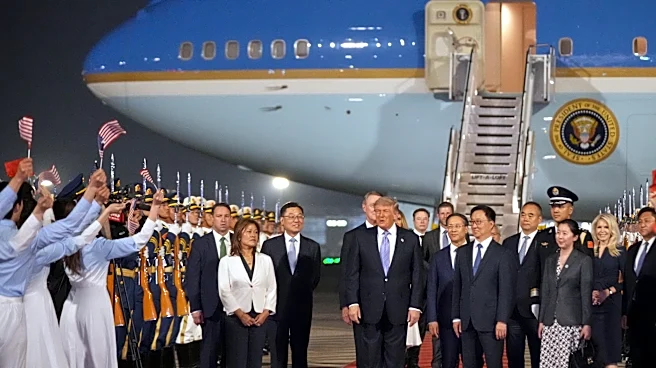
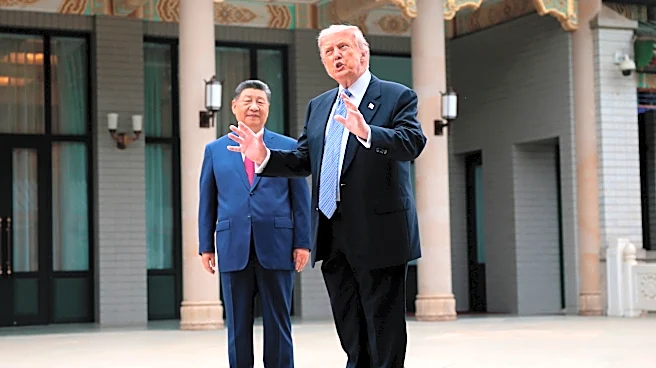
In a recent summit, President Trump and Chinese President Xi Jinping emphasized the importance of 'constructive stability' in their bilateral relations. This new diplomatic language suggests a commitment to coexistence despite unresolved issues such as Taiwan,
tariffs, and technology. Wendy Cutler, vice president of the Asia Society Policy Institute, notes that this shift in rhetoric may indicate a willingness to manage tensions more constructively. The summit also hinted at potential economic cooperation, with expectations of increased Boeing orders from China following an initial agreement.
Why It's Important?
The concept of 'constructive stability' could mark a significant shift in U.S.-China relations, potentially reducing the risk of conflict and fostering collaboration in areas of mutual interest. This approach may help stabilize global markets and provide a framework for addressing contentious issues through dialogue rather than confrontation. However, the underlying tensions remain, and the success of this strategy will depend on both nations' ability to navigate complex geopolitical challenges while maintaining open communication channels.
What's Next?
Observers will be watching for concrete actions following the summit, such as new trade agreements or joint initiatives in technology and climate change. The U.S. and China may also engage in further diplomatic efforts to address specific areas of tension, such as Taiwan and cybersecurity. The international community will be keen to see if this new approach leads to tangible improvements in bilateral relations and contributes to global stability.