



What's Happening?
The European Commission has approved a €5 billion scheme to support the development of offshore wind energy as part of its Clean Industrial Deal. This initiative aims to contribute to the EU's transition towards a net-zero economy by 2050 and achieve
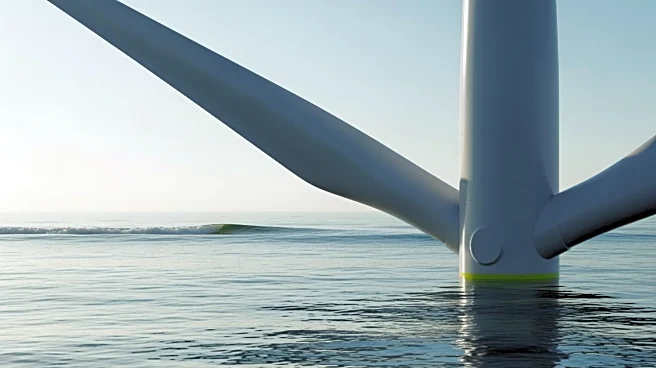
the 2030 renewable energy target. The scheme will fund the construction and operation of two offshore wind farms, Hesselø and North Sea I Mid, in Denmark. These projects are expected to significantly increase Denmark's renewable energy capacity, with Hesselø generating 3.2 terawatts per hour annually and North Sea I Mid producing 4.6 terawatts per hour. The initiative is part of a broader effort to double the deployment rates of renewables seen over the past decade.
Why It's Important?
This development is a critical step towards achieving the EU's climate neutrality goals and reducing reliance on fossil fuels. By investing in offshore wind energy, the EU is positioning itself as a leader in renewable energy technology, which could have significant economic and environmental benefits. The scheme is expected to create jobs, stimulate economic growth, and reduce greenhouse gas emissions. It also sets a precedent for other regions to follow, potentially accelerating the global transition to renewable energy. The success of this initiative could influence energy policies worldwide and encourage further investment in sustainable energy solutions.
What's Next?
The construction of the wind farms is expected to begin soon, with the projects anticipated to be operational by the late 2020s. The EU will likely continue to develop and implement policies that support renewable energy growth, including additional funding schemes and regulatory frameworks. Member states may also be encouraged to adopt similar initiatives to meet their national renewable energy targets. The success of these projects could lead to further advancements in wind energy technology and infrastructure, enhancing the EU's energy security and sustainability.