







What's Happening?
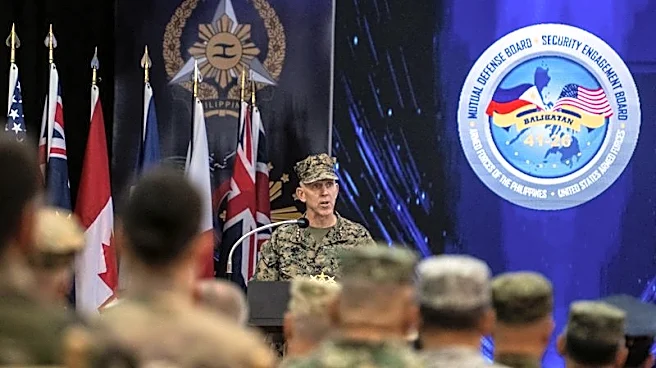
The United States and the Philippines have initiated their largest joint military exercise, known as 'Balikatan,' which translates to 'shoulder-to-shoulder' in Tagalog. This exercise involves over 17,000 military personnel from both nations, along with
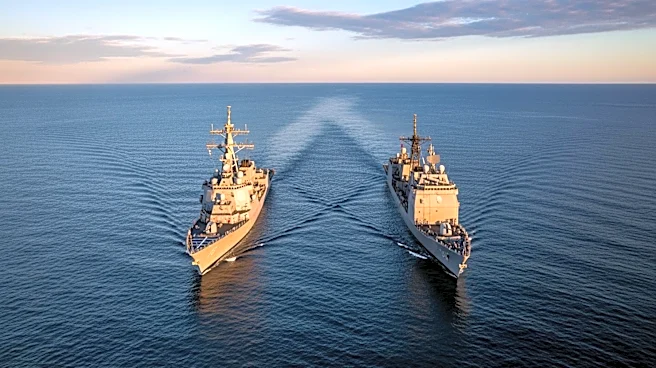
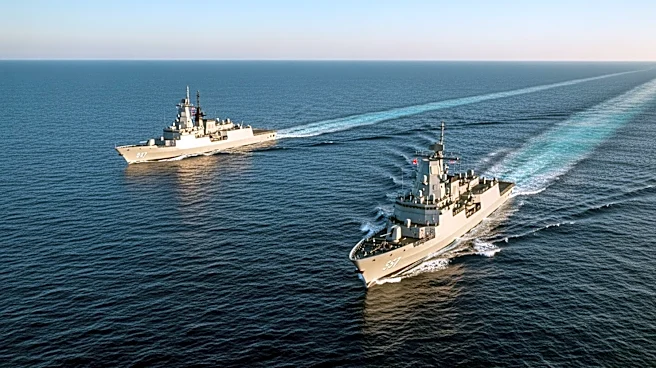
participation from Japan, France, and Canada. The drills are designed to enhance deterrence and resilience against regional aggression, particularly in the South China Sea and Taiwan Strait. Marine Lt. Gen. Christian Wortman emphasized the U.S.'s unwavering commitment to the Indo-Pacific region despite other global challenges. The exercises include mock battle scenarios and live-fire maneuvers, with Japanese forces firing missiles to sink a mock enemy ship and U.S. forces deploying marine drones for bombardment.
Why It's Important?
The joint military exercise underscores the strategic importance of the Indo-Pacific region and the U.S.'s commitment to its allies, particularly the Philippines. This collaboration aims to counteract China's assertive actions in the South China Sea, a critical global trade route. The exercise serves as a demonstration of military might and a commitment to uphold international law and sovereignty. It also highlights the geopolitical tensions in the region, with China viewing these drills as attempts to contain its rise. The U.S. has reiterated its obligation to defend the Philippines in case of armed conflict, reinforcing the security alliance between the two nations.
What's Next?
The exercises are expected to last nearly three weeks, with continued focus on enhancing military capabilities and cooperation among participating nations. The U.S. and Philippines will likely continue to strengthen their defense ties, potentially leading to more frequent and larger-scale joint exercises. The drills may provoke reactions from China, which could lead to increased diplomatic tensions. Additionally, the exercises could influence regional security policies and alliances, as other nations may seek to bolster their own military capabilities in response to perceived threats.