






What's Happening?
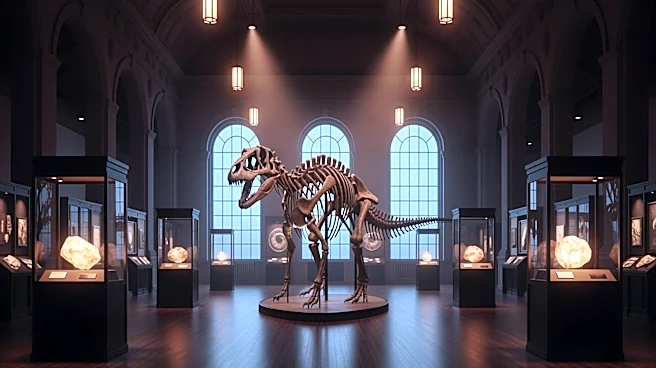
Amanita, a New York art gallery, is showcasing three Maiasaura dinosaur skeletons as part of an exhibition titled 'Land Before Time: Three Dinosaurs and a Gondola.' The exhibition, running through August 9, features juvenile, adolescent, and adult specimens,
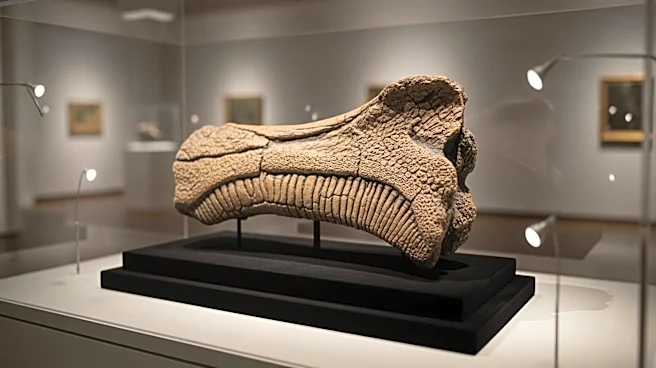
providing a comprehensive view of the dinosaur's growth cycle. This marks a significant moment as it is the first time a full Maiasaura growth cycle is displayed. The gallery collaborated with Tucson-based Granada Gallery, known for its expertise in natural history, to bring these fossils to the public. The exhibition also includes a rare sculpture by John Chamberlain, adding an artistic dimension to the display. The fossils are available for purchase, although prices remain undisclosed.
Why It's Important?
This exhibition highlights the growing intersection between fine art and archaeology, as commercial galleries increasingly engage with natural history artifacts. By making these fossils available to the public, Amanita addresses the debate over private ownership of such relics, promoting accessibility and education. The exhibition also reflects a shift in the art market, where non-traditional items like fossils are gaining interest from private and institutional collectors. This trend could influence future art exhibitions and sales, potentially expanding the market for natural history artifacts. The involvement of Granada Gallery, which has integrated excavation and retail operations, underscores the evolving business models in this niche market.
What's Next?
The success of this exhibition could encourage other galleries to explore similar collaborations, potentially leading to more public displays of rare fossils. The interest from private and institutional buyers suggests a growing market for such artifacts, which may prompt further integration of natural history into the art world. Additionally, the exhibition could spark discussions on the ethical implications of fossil ownership and the role of galleries in preserving and showcasing these historical treasures. As the market for fossils develops, galleries may need to navigate legal and ethical considerations, particularly regarding the sourcing and sale of such items.