
What's Happening?
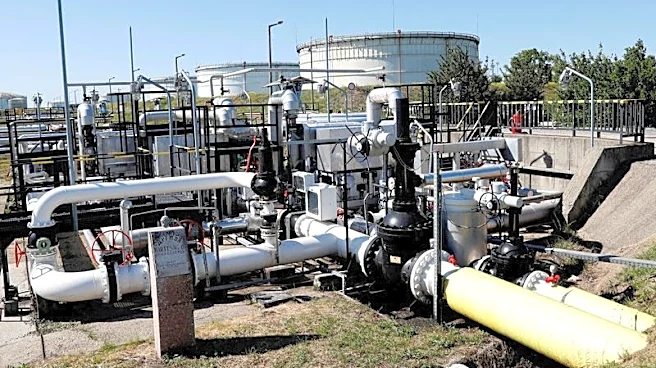
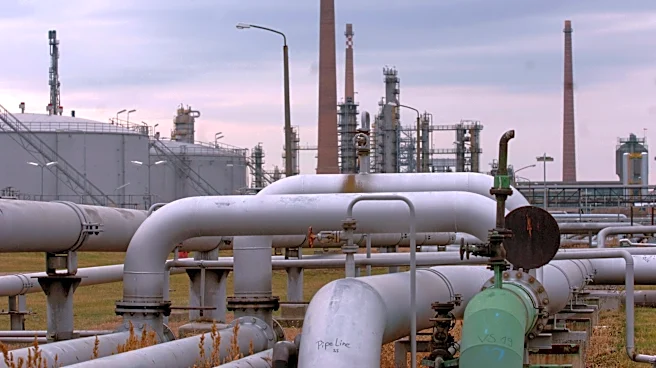
Russia has announced plans to stop the flow of Kazakh oil through the Druzhba pipeline to a refinery in eastern Germany starting May 1. This decision, confirmed by Russia's Deputy Prime Minister Alexander
Novak, is attributed to current technical capacities and will redirect the oil to other logistics routes. The German subsidiary of Rosneft, Russia's state-owned oil company, is assessing the implications of this pipeline closure and exploring options to ensure the security of supply in Germany. The refinery in eastern Germany, which supplies much of the Berlin region with fuel, is expected to experience limited impact due to this suspension.
Why It's Important?
The halt in oil transit through the Druzhba pipeline underscores the ongoing tensions in energy supply between Russia and Europe. This move could potentially strain Germany's energy resources, although officials have indicated that the impact will be limited. The situation highlights the broader geopolitical dynamics at play, as Europe continues to navigate its energy dependencies amidst the backdrop of the war in Ukraine and Western sanctions against Russia. The decision also reflects Russia's strategic use of energy supplies as a tool of influence in its relations with European countries.
What's Next?
Germany will need to explore alternative sources and logistics to maintain its energy supply, particularly for the Berlin region. The German government and Rosneft Germany are likely to continue assessing the situation and may seek to negotiate with Russia or other suppliers to mitigate the impact. Additionally, this development may accelerate Europe's efforts to reduce dependency on Russian energy and diversify its energy sources, aligning with broader EU strategies to enhance energy security.