








What's Happening?
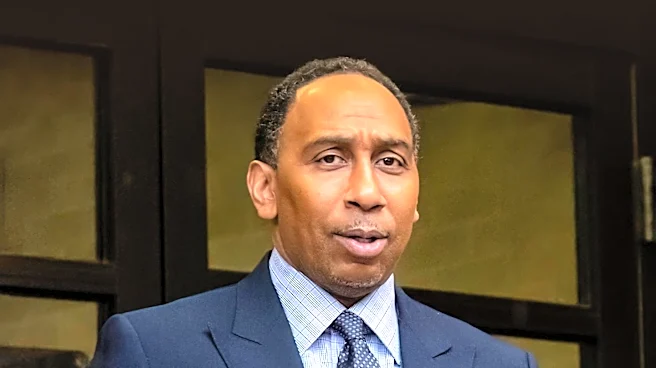
The National Association of Black Journalists (NABJ) has given ESPN commentator Stephen A. Smith a 'Thumb's Down' award at its Atlanta convention. This award, which caused an uproar, was presented due to what the NABJ described as a 'recurring public
pattern of disparaging public commentary directed at prominent Black women across politics, sports and media.' Specific instances cited include Smith's criticism of Texas U.S. Rep. Jasmine Crockett for her 'verbiage and rhetoric for the streets,' his comments on former First Lady Michelle Obama's remarks regarding voting for President Trump, and his questioning of tennis star Serena Williams' Super Bowl cameo in relation to her ex-partner. The decision has led to deep divisions among NABJ members, with some supporting the award as appropriate accountability and others calling it an 'unforced error.'
Why It's Important?
This award highlights a significant debate within media and public discourse regarding the treatment and portrayal of Black women by prominent figures. Stephen A. Smith is one of the nation's most recognized journalists, and the NABJ's decision to publicly censure him underscores the organization's commitment to addressing what it perceives as harmful rhetoric. The controversy brings to light the power dynamics within media, where commentators with large platforms can influence public perception. It also raises questions about accountability for public figures and the role of professional organizations in upholding ethical standards. The division among NABJ members reflects broader societal disagreements on what constitutes appropriate criticism versus disparagement, particularly when race and gender intersect.
What's Next?
The NABJ has expressed a willingness to engage in a conversation with Stephen A. Smith regarding the award and the issues it addresses. Smith has publicly defended himself on his podcast and on Fox News, indicating a potential for continued public debate rather than immediate resolution. The ongoing discussion among Black journalists and the wider public suggests that the implications of this award will continue to be analyzed. This event could prompt other media organizations and personalities to re-evaluate their commentary, particularly concerning marginalized groups. It may also lead to further discussions within professional journalistic bodies about the criteria and impact of such awards and the broader responsibility of media figures.
Beyond the Headlines
Beyond the immediate controversy, this event touches upon deeper ethical and cultural dimensions within journalism and public commentary. It raises questions about the line between critical analysis and personal attacks, especially when directed at women of color who often face unique challenges in public life. The 'Thumb's Down' award, originally created in 1989, serves as a mechanism for accountability, but its application in this high-profile case reveals the complexities of enforcing such standards in a polarized media landscape. The differing opinions among journalists underscore the evolving nature of media ethics and the challenges of navigating free speech alongside responsible commentary. This incident could contribute to a broader re-evaluation of how public figures engage with and discuss issues related to race and gender, potentially influencing future journalistic practices and public discourse.