






What's Happening?
China has announced plans to double its supply of non-fossil fuel energy by 2035, as stated by Wang Changlin, vice chairman of China’s National Development and Reform Commission. This initiative is part of China's latest five-year plan to achieve its climate
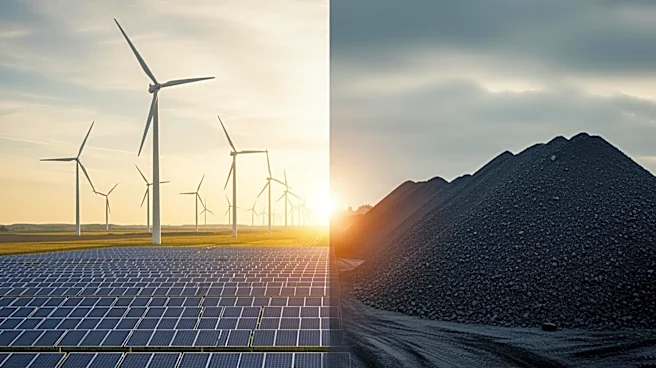
goals. The country aims to significantly increase non-fossil energy supply by 2030 and double it by 2035 compared to 2025 levels. This plan includes projects like a massive hydropower project in Tibet and a 50 MW concentrated solar installation at high altitudes. Despite these efforts, China continues to rely heavily on coal, having started building 94.5 gigawatts of new coal-fired capacity in 2024, which accounts for 93% of all new global coal construction that year.
Why It's Important?
China's commitment to doubling its renewable energy supply is crucial for global climate change efforts, given its status as the world's largest polluter and leading exporter of solar and wind technologies. However, the continued reliance on coal poses a significant challenge to reducing greenhouse gas emissions. The expansion of renewable energy could help China meet its climate commitments, but the persistent use of coal for energy security and economic reasons may undermine these efforts. The success of China's renewable energy initiatives could influence global energy markets and climate policies, especially as other countries look to China for leadership in renewable technology.
What's Next?
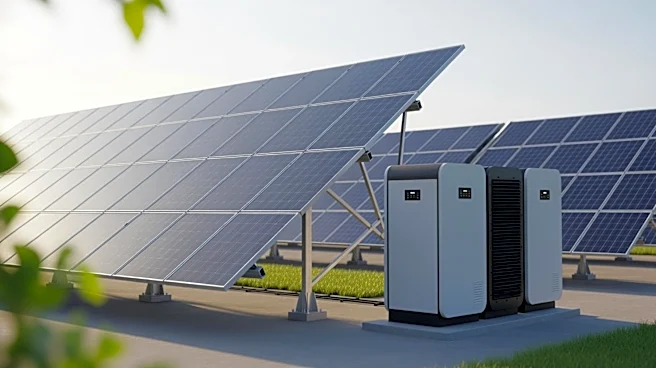
China's future energy strategy will likely involve balancing its renewable energy expansion with its coal dependency. The country's ability to meet its ambitious renewable energy targets will depend on overcoming internal challenges, such as vested interests in coal-producing regions and the need for energy security. The development of grid-scale battery storage and pumped hydro energy storage could play a critical role in reducing reliance on coal. As China continues to invest in renewable energy, the global community will be watching to see if these efforts translate into significant reductions in carbon emissions.
Beyond the Headlines
The dual focus on renewable energy and coal highlights the complex dynamics of China's energy policy, where economic growth, energy security, and environmental sustainability are often at odds. The success of China's renewable energy initiatives could lead to technological advancements and cost reductions that benefit the global market. However, the continued expansion of coal capacity raises ethical and environmental concerns, as it may contribute to long-term climate change impacts. The international community may need to engage with China to encourage a more aggressive shift away from coal.