









What's Happening?
The U.S. Department of Agriculture (USDA) has announced a significant expansion of its Farm to School Grant Program, marking the largest single-year financial investment in the program's history. Secretary Brooke L. Rollins revealed that nearly $20 million
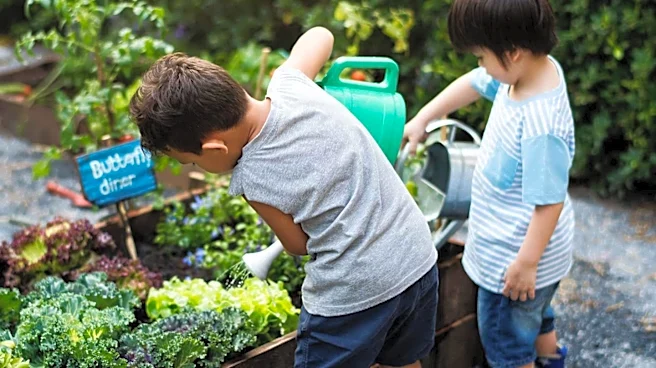
has been awarded to 68 projects across the United States. These projects aim to integrate local foods into school meals, summer meals, and childcare settings, thereby supporting American farmers, producers, ranchers, and fishers. The initiative is part of the fiscal year 2026 Patrick Leahy Farm to School Grants, which focus on innovative, large-scale projects built on strong partnerships. The program not only enhances children's nutrition by providing farm-fresh, nutrient-rich foods but also strengthens local economies by creating dependable markets for local producers.
Why It's Important?
This expansion of the Farm to School Program is crucial for several reasons. Firstly, it addresses child nutrition by ensuring that students have access to fresh, locally sourced foods, which can improve health outcomes and educational performance. Secondly, it supports local agriculture by providing farmers with stable markets, thereby boosting local economies. The program also fosters agricultural literacy among students, preparing them for potential careers in agriculture, which is a significant industry in many states. By investing in these projects, the USDA is reinforcing the importance of sustainable food systems and community resilience.
What's Next?
The USDA's commitment to the Farm to School Program suggests ongoing support for similar initiatives in the future. As these projects are implemented, they may serve as models for other regions, potentially leading to further expansions and adaptations of the program. Stakeholders, including local governments, schools, and agricultural producers, are likely to monitor the outcomes closely to assess the program's impact on nutrition and local economies. Continued collaboration between schools and local farms could lead to more innovative approaches to integrating agriculture into education and nutrition programs.