




What's Happening?
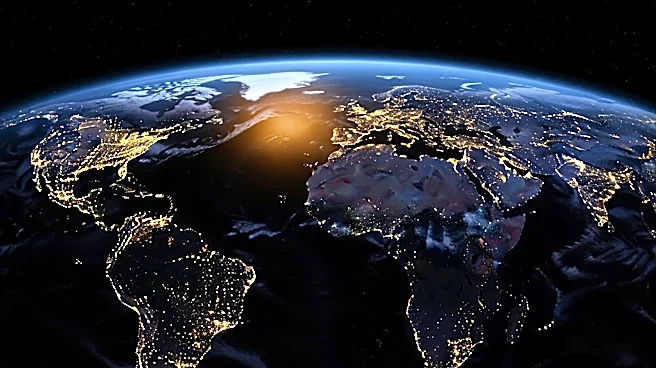
NASA has released new nighttime maps based on satellite imagery that reveal significant changes in global lighting patterns over the past decade. The study, led by Tian Li and Zhe Zhu from the University of Connecticut, utilized a new algorithm to analyze
1.16 million satellite images collected nightly over nine years. The findings highlight intense flaring over major U.S. oil and gas fields, such as the Permian Basin in Texas and North Dakota's Bakken Formation, where excess methane gas is burned off, releasing carbon dioxide and soot. The imagery also shows how rural electrification and energy conservation are altering nighttime experiences worldwide. The data, collected by the Visible Infrared Imaging Radiometer Suite (VIIRS) aboard NASA and NOAA satellites, provides insights into energy sector dynamics and national security interests.
Why It's Important?
The study's findings have significant implications for understanding energy consumption and environmental impacts. By revealing patterns of gas flaring and energy use, the data can inform policy decisions and investment strategies. The ability to track energy waste, such as flared gas, offers a valuable tool for operators, investors, and insurers, potentially leading to more efficient energy practices. Additionally, the data highlights the impact of technological advancements and policy-driven changes, such as the adoption of energy-efficient LEDs, on global lighting patterns. This information is crucial for addressing environmental and economic challenges, as it provides a clearer picture of how energy is distributed and consumed globally.
What's Next?
The continued use of NASA's night-light data will likely influence future energy policies and conservation efforts. As the data is publicly accessible, it can be used by various stakeholders to monitor and improve energy efficiency. The insights gained from this study may lead to increased investment in technologies that reduce energy waste and emissions. Furthermore, the ability to track changes in lighting patterns could help identify areas in need of infrastructure improvements or policy interventions. As global energy demands evolve, the ongoing analysis of night-light imagery will be essential for adapting to new challenges and opportunities in the energy sector.
Beyond the Headlines
The study's findings also raise ethical and environmental considerations regarding energy production and consumption. The visibility of gas flaring and its environmental impact underscores the need for more sustainable energy practices. Additionally, the data highlights disparities in energy access and consumption, prompting discussions about energy equity and the role of technology in bridging these gaps. The ability to monitor global lighting patterns in real-time offers a unique perspective on the interconnectedness of energy systems and their impact on the environment, potentially driving more holistic approaches to energy management.