







What's Happening?
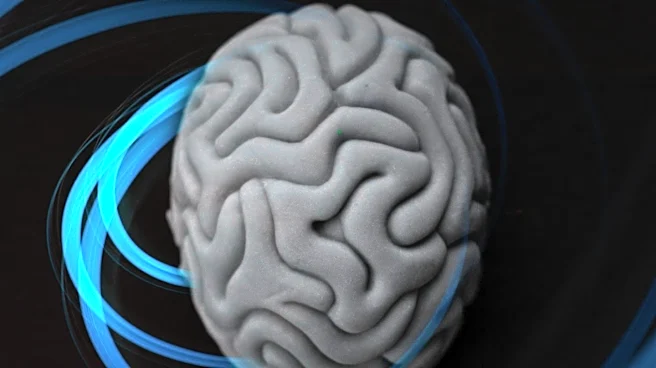
Researchers at the Allen Institute have uncovered a previously unknown complex messaging system within the locus coeruleus (LC) region of the mouse brain. Contrary to the long-held belief that the LC acts as a 'loudspeaker' broadcasting a single norepinephrine
signal across the brain, the new study, published in Nature, reveals that the LC communicates through distinct pathways. Using brain imaging, neural activity recordings, genetic techniques, and behavioral experiments in mice, scientists found that different groups of LC neurons send signals to specific destinations, with varying responses to different experiences. For instance, neurons in the upper LC connect to the cerebral cortex and forebrain, while those in the lower LC send signals to the brainstem and spinal cord. This organized network allows different parts of the LC to influence separate brain functions, suggesting a more targeted 'postal network' rather than a general broadcast system. The study also identified exceptionally long axons in LC neurons, with one neuron having a reconstructed length of 70.32 centimeters, making it the longest single neuron ever measured in a mouse.
Why It's Important?
This discovery significantly alters the understanding of brain communication and has profound implications for neurological and mental health conditions. Norepinephrine, produced by the LC, is crucial for regulating attention, learning, and mood, making it a target for medications treating depression, anxiety, and ADHD. Current treatments often affect multiple brain circuits, leading to side effects. A clearer map of the LC's specialized pathways could enable the development of more selective therapies that target specific circuits involved in particular symptoms, potentially improving treatment efficacy and reducing unwanted effects. Furthermore, LC neurons are among the first to deteriorate in Alzheimer's disease, suggesting that these findings could contribute to a better understanding and treatment of this condition. The research, supported by the National Institutes of Health's BRAIN Initiative, highlights the potential for more precise interventions in brain disorders by moving beyond broad-spectrum approaches to highly targeted treatments.
What's Next?
The findings, while currently based on mouse models, are expected to inform future research into human brain function and the development of new therapeutic strategies. The detailed mapping of the LC's specialized pathways could guide scientists in designing medications that act more precisely on the neural circuits implicated in specific symptoms of neurological and mental health disorders. This could lead to a new generation of treatments for conditions like depression, anxiety, ADHD, and Alzheimer's disease with fewer side effects. Further research will likely focus on translating these findings from mice to humans and exploring how this intricate communication network can be modulated for therapeutic benefit. The identification of distinct gene expression patterns in different LC neuron groups also opens avenues for gene-targeted interventions.
Beyond the Headlines
The revelation of a 'targeted postal network' within the brain's norepinephrine system challenges a fundamental assumption in neuroscience and underscores the brain's intricate complexity. This shift from a 'loudspeaker' to a 'postal network' metaphor suggests a highly evolved and efficient system for information processing. The discovery of exceptionally long neurons with selective connections further emphasizes the brain's capacity for precise, yet widespread, communication. This research could trigger a paradigm shift in how brain disorders are conceptualized and treated, moving towards highly personalized and circuit-specific interventions. It also highlights the ethical considerations of manipulating such precise brain networks and the importance of continued, rigorous research to ensure safe and effective applications.