









What's Happening?
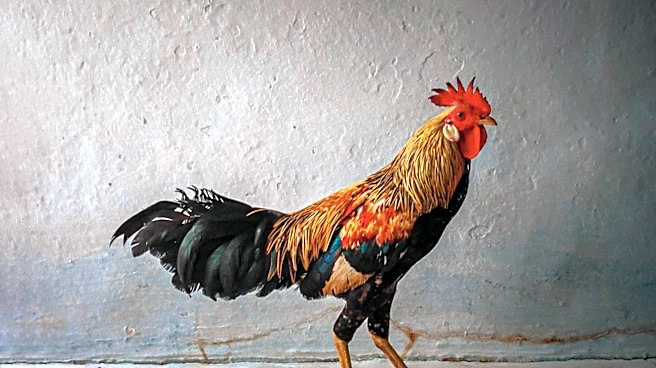
Residents in Kahaluʻu, Oʻahu, are expressing frustration over a neighbor who keeps more than 100 noisy chickens, primarily roosters, leading to significant noise disturbances. Joel Miranda, a resident, reports being woken daily at 4 a.m. by the crowing,
impacting his sleep and health. The roosters are housed in numerous enclosures on the neighbor's property. While city law typically limits households to two chickens and defines excessive noise as an animal nuisance, officials state these rules may not apply due to the neighborhood's rural, country zoning. The neighbor, Cherie Young, asserts her right to keep the chickens, citing the agricultural zoning and denying any commercial enterprise, though her nephews enter the roosters in shows.
Why It's Important?
This situation highlights a conflict between urban development and agricultural zoning laws, particularly in areas experiencing population growth. The dispute underscores the challenges local governments face in balancing property rights, quality of life for residents, and the preservation of agricultural land use. The lack of clear enforcement or conflicting interpretations of existing ordinances creates a legal gray area, leaving residents like Miranda feeling unheard and without recourse. This issue could set a precedent for how similar disputes are handled in other mixed-use or transitioning zones across Oʻahu, potentially impacting property values, community harmony, and the effectiveness of local governance in addressing citizen complaints.
What's Next?
The issue is currently caught between conflicting interpretations of Oʻahu's zoning laws and animal nuisance ordinances. Council member Matt Weyer, who represents the district, acknowledges the need for clarity in how the Department of Planning and Permitting (DPP) and the Honolulu Police Department (HPD) interpret and apply these laws. While Young maintains her roosters are allowed under agricultural zoning, neighbors argue the animal nuisance law should still apply. HPD has not yet responded to requests for comment on their enforcement stance. The ongoing investigation and potential for further legal or legislative action to clarify these overlapping laws will determine the resolution for the Kahaluʻu residents and could influence future land use and animal control policies on Oʻahu.
Beyond the Headlines
The Kahaluʻu rooster dispute touches upon deeper cultural and ethical considerations regarding animal welfare and community living. While Young views her chickens as part of her family's long-standing tradition and a community-building activity through shows, neighbors perceive them as a significant nuisance impacting their well-being. This conflict reflects differing values concerning rural living versus residential tranquility. The historical context of the property, where chickens were previously kept for cockfighting, adds another layer of complexity, raising questions about the evolution of animal keeping practices and their social acceptance. The case also brings to light the limitations of existing legal frameworks in addressing nuanced community conflicts that fall between traditional categories of commercial and residential use.