






What's Happening?
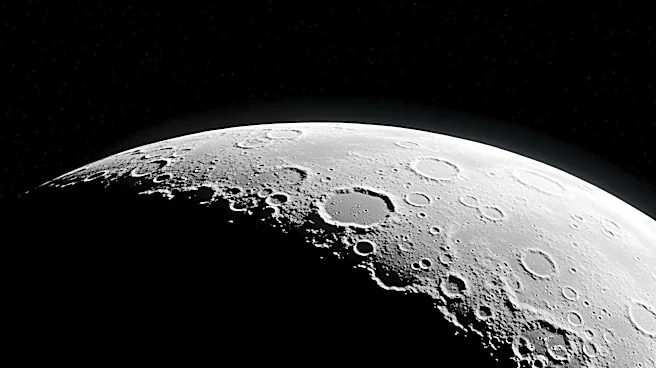
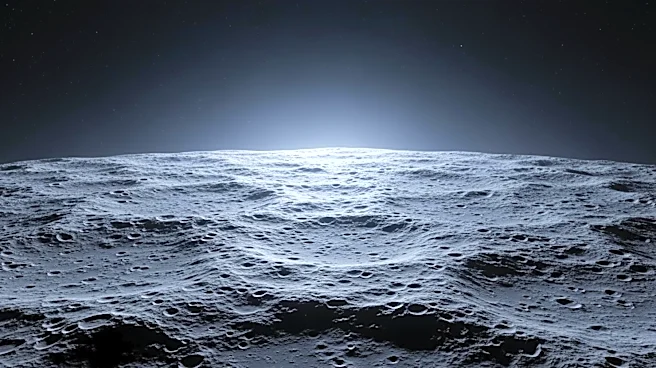
NASA's Artemis 2 mission provided astronauts with a rare opportunity to observe the moon's far side, a view not seen by humans in over 50 years. The mission, which took place in early April, involved a team of four astronauts who were trained by NASA's lunar
scientists to identify and document various geological features on the moon. The astronauts used a Lunar Science Passport, a guide that helped them focus on key observation targets, known as the 'Big Fifteen.' These targets included diverse geological formations that could provide answers to significant scientific questions. The mission emphasized the importance of human observation, as astronauts were able to perceive colors and textures that robotic explorers might miss. This human element allowed for a more nuanced understanding of the moon's surface, contributing valuable data to NASA's ongoing lunar research.
Why It's Important?
The Artemis 2 mission is significant as it enhances our understanding of the moon's geological history, which in turn can offer insights into Earth's early history. The ability of astronauts to observe and describe the moon's surface in detail provides data that robotic missions cannot match. This mission underscores the value of human space exploration in scientific discovery, particularly in understanding planetary formation and evolution. The observations made by the Artemis 2 crew could lead to new hypotheses about the moon's composition and the processes that have shaped its surface. This knowledge is crucial for future lunar missions and could inform strategies for sustainable human presence on the moon.
What's Next?
Following the Artemis 2 mission, NASA plans to analyze the extensive data collected, including over 12,000 images and numerous audio recordings. The findings will be compiled into a preliminary science report, expected to be released within six months. This report will be made available on NASA's Planetary Data System, contributing to the broader scientific community's understanding of lunar science. The insights gained from Artemis 2 will also inform the planning and execution of future missions, such as Artemis 3 and Artemis 4, which aim to further explore the moon and establish a sustainable human presence.
Beyond the Headlines
The Artemis 2 mission highlights the ongoing importance of human space exploration in advancing scientific knowledge. The ability of astronauts to perceive and interpret subtle variations in the lunar surface offers a depth of understanding that complements robotic exploration. This mission also emphasizes the collaborative nature of space exploration, as scientists and astronauts work together to achieve common goals. The data collected could have long-term implications for our understanding of planetary science and the history of the solar system.