





What's Happening?
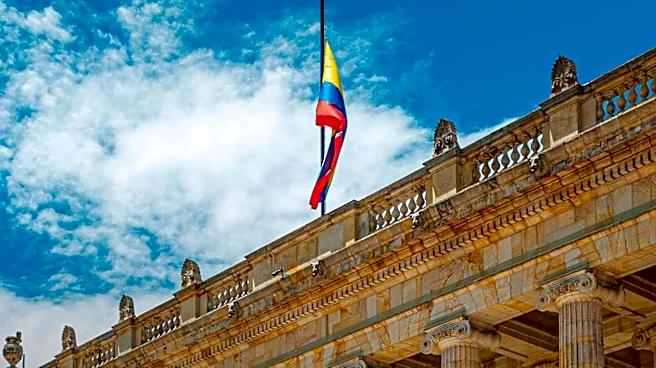
Alejandro Ocampo, Vice President of the Colombian Senate, has asserted that the corruption scandal within the National Unit for Disaster Risk Management (UNGRD) transpired without the knowledge or directives of President Gustavo Petro. Ocampo's statement
follows claims by former presidential advisor Sandra Ortiz, who is implicated in the UNGRD investigation. Ortiz had previously stated in an interview with Revista Cambio that no decisions were made in the Presidential Palace without the President's awareness. Ocampo, a senator from the ruling Pacto Histórico party, emphasized that the ongoing investigations should focus on determining the exact amount of money lost, identifying all responsible parties, and ensuring a judicial process with full guarantees. He stressed that the discussion should not be limited to public declarations or accusations between current and former officials, but rather delve into the specifics of how the alleged irregularities were facilitated and who was responsible. Ocampo's position suggests that the actions under investigation might have been carried out by officials acting without presidential authorization, a hypothesis he believes should be thoroughly examined.
Why It's Important?
This divergence in narratives from high-ranking officials regarding the UNGRD corruption scandal highlights a significant political and legal struggle within Colombia. The outcome of this investigation could profoundly impact public trust in government institutions and the current administration's integrity. If Ocampo's assertion that the embezzlement occurred 'behind the President's back' is substantiated, it could potentially shield President Petro from direct culpability, shifting blame to lower-level officials. Conversely, if Ortiz's claims of the President's awareness are proven, it could lead to severe political repercussions for the administration. The scandal involves the alleged misuse of public funds and bribery, which, regardless of who is ultimately held responsible, erodes confidence in the government's ability to manage public resources effectively and transparently. The ongoing legal process and the demand for full accountability are crucial for upholding the rule of law and potentially influencing future anti-corruption measures in Colombia.
What's Next?
The investigation into the UNGRD corruption scandal is expected to continue, with a focus on judicial review rather than public accusations. Senator Ocampo has called for the investigations to determine the destination of the embezzled funds and identify all individuals responsible, ensuring a fair judicial process. Sandra Ortiz, who is formally linked to the judicial process and charged with money laundering and influence peddling, is expected to present her defense. She has announced that she will challenge the evidence presented by the Prosecutor General's Office during her trial, which includes alleged inconsistencies in contract dates and testimonies. Ortiz also plans to present conversations that she claims support her version of events regarding the relationship between President Petro and former Senate President Iván Name, with a preparatory hearing scheduled for September 18. The legal proceedings will aim to establish whether the alleged corrupt acts were directed from higher levels of government or were the result of unauthorized actions by individual officials.
Beyond the Headlines
The UNGRD scandal transcends mere financial misconduct, touching upon deeper issues of governance, accountability, and the political culture in Colombia. The conflicting accounts from key figures like Senator Ocampo and former advisor Sandra Ortiz underscore the challenges in uncovering truth and assigning responsibility in high-profile corruption cases. The suggestion that corruption could occur 'behind the President's back' raises questions about oversight mechanisms and the effectiveness of internal controls within government agencies. Conversely, Ortiz's implication of presidential awareness highlights the potential for political influence and the concentration of power. This case could serve as a critical test for Colombia's judicial system, demonstrating its capacity to prosecute corruption impartially, regardless of political affiliations. The public's perception of justice and the government's commitment to transparency will be heavily influenced by the thoroughness and fairness of these proceedings, potentially shaping future political discourse and public engagement with anti-corruption efforts.