
What's Happening?
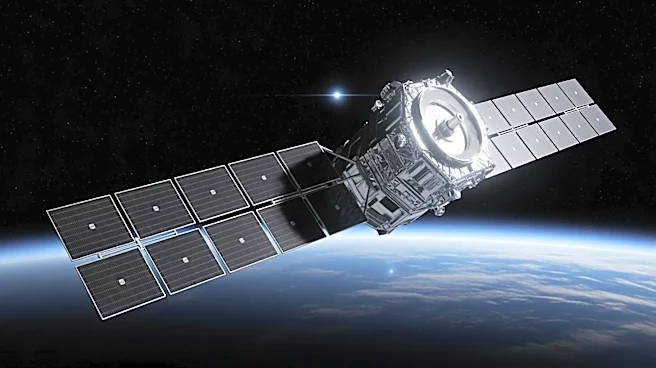
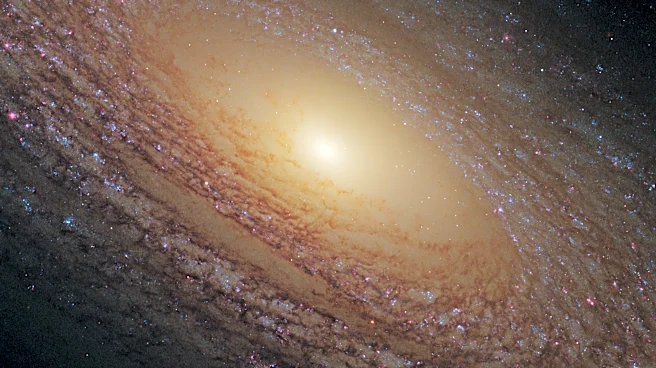
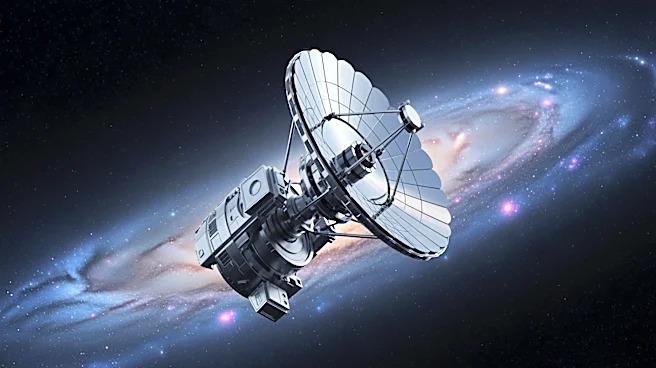
NASA's Nancy Grace Roman Space Telescope is set to significantly expand the search for exoplanets, potentially discovering around 100,000 new worlds. This mission will explore underexamined regions of
the Milky Way, particularly the galactic bulge, where stars are densely packed. The Roman Telescope will employ two primary methods: the transit method, which detects planets by observing dips in starlight as planets pass in front of stars, and microlensing, which identifies planets by observing the magnification of a star's light due to the gravitational effect of a planet. These techniques will allow the telescope to find planets in various orbits, including those similar to Earth's, and provide insights into planet formation across different galactic environments.
Why It's Important?
The Roman Space Telescope's mission is crucial for advancing our understanding of planetary systems beyond our solar system. By exploring diverse regions of the Milky Way, the mission will provide data on how planet formation varies across different environments, potentially revealing new types of planets and planetary systems. This could lead to a deeper understanding of the conditions necessary for planet formation and the potential for life elsewhere in the galaxy. The mission's findings will also complement existing data from other telescopes, offering a more comprehensive picture of the universe's planetary diversity.
What's Next?
As the Roman Space Telescope prepares for its mission, scientists are developing software and simulations to analyze the expected influx of data. Once operational, the telescope will begin its surveys, with data being made publicly available for further study. This will enable astronomers worldwide to participate in the search for new worlds and contribute to the growing body of knowledge about exoplanets. The mission's success could pave the way for future explorations and collaborations in the field of astronomy.