

What's Happening?
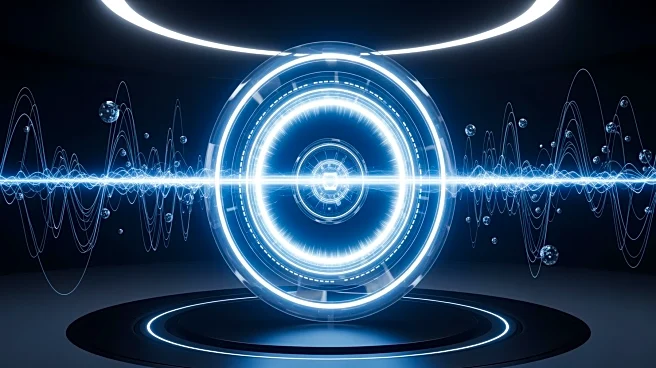
Scientists at the U.S. Department of Energy's Thomas Jefferson National Accelerator Facility have developed a particle accelerator that can significantly reduce the lifespan of nuclear waste. This Accelerator-Driven System (ADS) uses high-energy proton
beams to create neutrons, which then convert long-lived nuclear waste into more stable or shorter-lived isotopes. This process can reduce the isolation time for nuclear waste from 100,000 years to just 300 years. The project is part of the $8.17 million NEWTON program, which aims to develop efficient superconducting radio frequency cavities. The innovation is seen as a potential solution to the longstanding issue of nuclear waste management.
Why It's Important?
The development of this accelerator technology is crucial for the future of nuclear energy, as it addresses one of the most significant challenges: the safe disposal of nuclear waste. By drastically reducing the time nuclear waste remains hazardous, this technology could make nuclear energy a more viable and sustainable option for meeting global energy needs. It also aligns with global decarbonization goals and the increasing demand for electricity. The U.S. is investing in small modular reactors and advanced nuclear fuels, while countries like China are rapidly expanding their nuclear capabilities. This innovation could position the U.S. as a leader in nuclear waste management technology.
What's Next?
The Jefferson Lab project is still in the research and optimization phase, but its success could lead to widespread adoption of this technology in nuclear facilities worldwide. The U.S. government may consider integrating this technology into its nuclear waste management strategies, potentially revisiting plans for long-term storage solutions like the Yucca Mountain repository. Internationally, countries with growing nuclear programs may look to adopt similar technologies to manage their waste more effectively. The development could also influence policy decisions and funding allocations for nuclear energy projects.