





What's Happening?
Donovan McKinney has successfully defeated incumbent Democrat Shri Thanedar in a pitched primary battle in Michigan. This victory positions McKinney to join Michigan's new Congressional delegation, which is being characterized as one of the most progressive
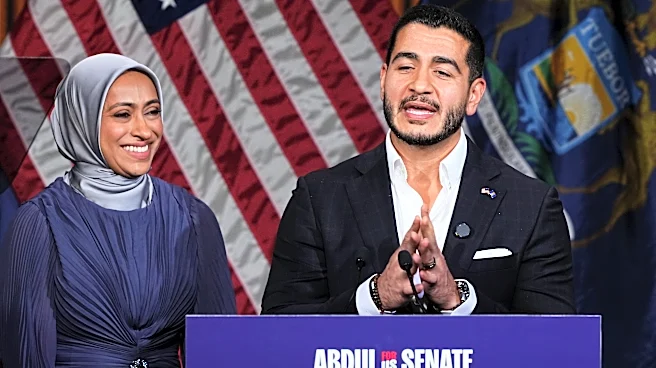
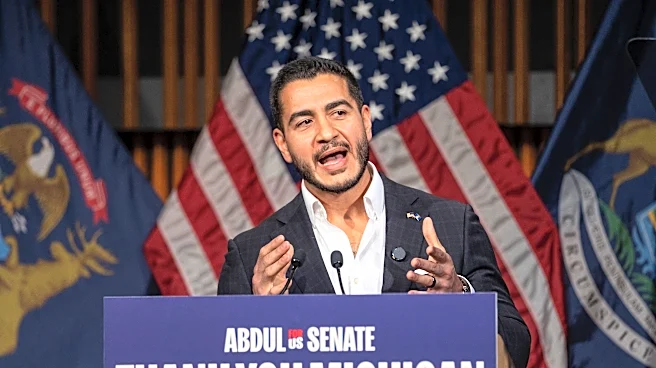
Democratic congressional delegations in the nation, potentially second only to New York's. The broader context of this election includes significant Democratic victories across Michigan, such as Dr. Abdul El-Sayed winning the Senate race to succeed Senator Gary Peters, and Jocelyn Benson succeeding Michigan Governor Gretchen Whitmer. Additionally, climate activist William Lawrence secured a win in the state’s Seventh Congressional District, overcoming substantial GOP spending. The Michigan delegation will also include Rashida Tlaib, further solidifying its progressive alignment.
Why It's Important?
McKinney's victory over an incumbent like Shri Thanedar signals a potential shift towards a more progressive political landscape within Michigan's Democratic representation in Congress. This outcome, alongside other key Democratic wins in the state, could significantly influence national policy discussions, particularly on issues championed by progressive movements. The formation of a highly progressive delegation from Michigan may lead to increased advocacy for policies such as Medicare for All, as promised by Senator-elect El-Sayed, and stronger environmental initiatives, given William Lawrence's background as a climate activist. This collective progressive voice from Michigan could play a crucial role in shaping the Democratic Party's agenda and legislative priorities in the coming years, potentially impacting federal funding, regulatory frameworks, and social programs across the U.S.
What's Next?
Following his primary win, Donovan McKinney will proceed to the general election, where he easily defeated his Republican opponent. His integration into Michigan's new Congressional delegation, alongside figures like Rashida Tlaib and Senator-elect Abdul El-Sayed, suggests a concerted effort to advance progressive policies at the federal level. The new delegation is expected to push for a range of progressive legislative initiatives, potentially including healthcare reform, climate action, and social justice measures. The collective strength of this progressive bloc from Michigan could influence committee assignments, legislative debates, and the overall direction of the Democratic Party in Congress. Their actions will be closely watched by both progressive advocates and political opponents, as they aim to translate their electoral success into tangible policy changes.
Beyond the Headlines
The defeat of an incumbent like Shri Thanedar by Donovan McKinney, within a broader wave of progressive victories in Michigan, highlights a significant trend in American politics: the increasing influence of progressive movements within the Democratic Party. This shift suggests a growing demand among voters for more assertive and ideologically aligned representation. The characterization of Michigan's delegation as 'perhaps the most progressive Democratic congressional delegation in the nation' underscores a potential realignment of political power and priorities. This development could inspire similar movements in other states, leading to a more pronounced progressive wing within the national Democratic Party. It also raises questions about the future of moderate Democrats and the strategies they will need to adopt to remain competitive in an evolving political landscape, potentially leading to a more polarized but ideologically coherent political discourse.