




What's Happening?
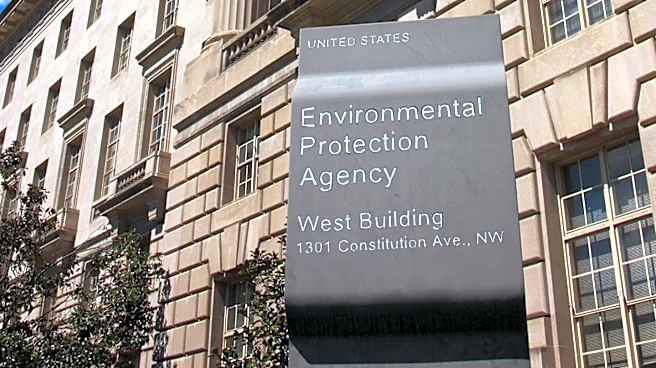
The Environmental Protection Agency (EPA) is directed to implement an 85 percent phasedown of the production and consumption of hydrofluorocarbons (HFCs) by 2035. This directive stems from the American Innovation & Manufacturing (AIM) Act, bipartisan
legislation authored by Senate Environment and Public Works (EPW) Chairman Tom Carper (D-Del.) and Senator John Kennedy (R-La.). The AIM Act, now Public Law 116-260, mandates this significant reduction in HFCs, which are potent greenhouse gases. The EPW Committee played a critical role in the development and passage of this legislation, highlighting a bipartisan effort to address environmental concerns related to these chemicals. This phasedown is a key component of broader environmental protection efforts in the United States.
Why It's Important?
The phasedown of HFCs is important due to their significant contribution to climate change. HFCs are commonly used in refrigeration, air conditioning, and other industrial applications, and they have a much higher global warming potential than carbon dioxide. By reducing their production and consumption by 85 percent, the U.S. aims to mitigate a substantial amount of greenhouse gas emissions, aligning with international efforts to combat climate change. This action will impact various industries that rely on HFCs, necessitating a transition to alternative, more environmentally friendly substances. The bipartisan nature of the AIM Act underscores a rare consensus in U.S. politics regarding environmental policy, potentially setting a precedent for future legislative actions on climate-related issues. The move could also spur innovation in the development of new, sustainable cooling technologies.
What's Next?
The EPA will continue to implement the phasedown of HFCs as mandated by the AIM Act, working towards the 85 percent reduction target by 2035. This will involve ongoing regulatory actions, monitoring, and enforcement to ensure compliance across relevant industries. Businesses that currently utilize HFCs will need to accelerate their transition to alternative refrigerants and technologies. This transition may involve significant investments in research and development, as well as upgrades to existing equipment and infrastructure. The EPA's role will also include providing guidance and support to industries to facilitate a smooth and effective phasedown. Future legislative efforts might build upon the success of the AIM Act, potentially addressing other potent greenhouse gases or expanding the scope of climate-related regulations.
Beyond the Headlines
The phasedown of HFCs under the AIM Act represents a broader shift in U.S. environmental policy towards proactive measures against climate change. Beyond the direct environmental benefits, this initiative could foster economic opportunities in the green technology sector, as companies innovate and develop new, sustainable solutions. The bipartisan support for the AIM Act suggests a potential for future collaboration on environmental issues, even in a politically divided landscape. This could lead to more stable and predictable regulatory environments for businesses, encouraging long-term investments in sustainable practices. Furthermore, the U.S. action on HFCs could influence international climate negotiations and encourage other nations to adopt similar stringent measures, contributing to a global reduction in greenhouse gas emissions.