






What's Happening?
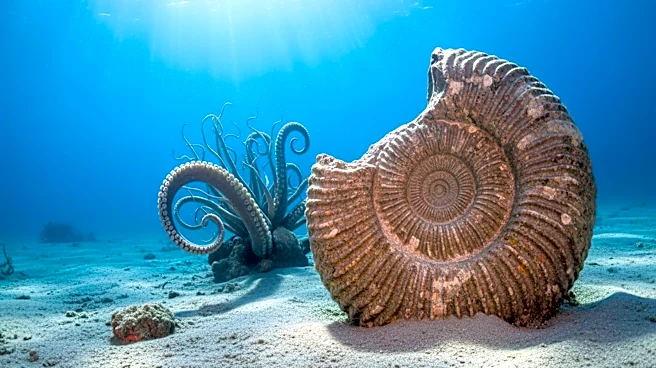
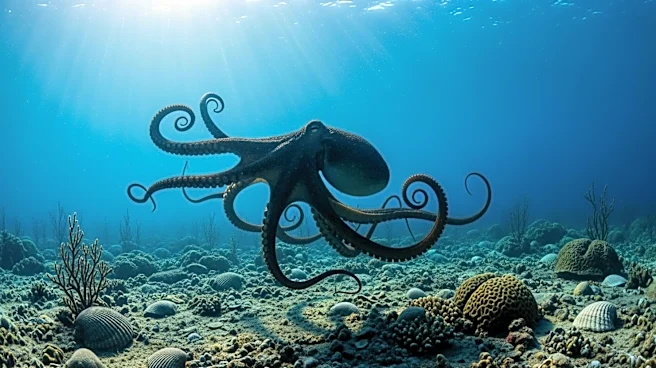
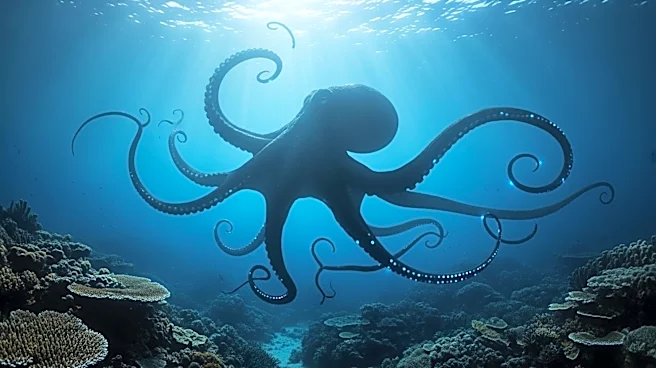
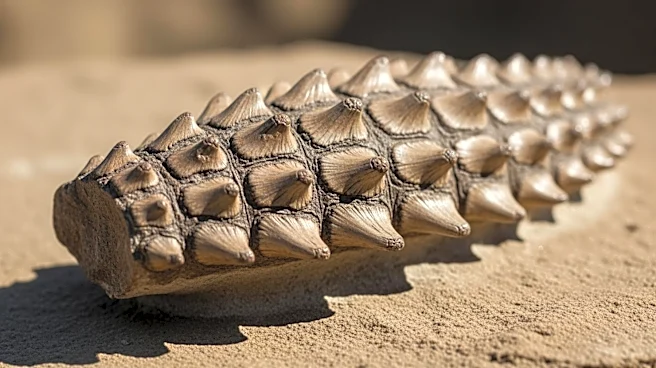
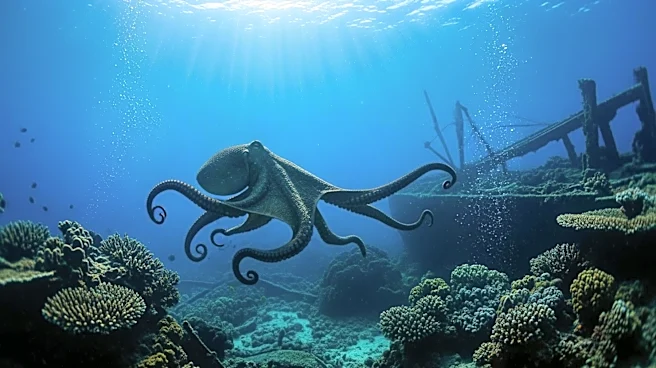
A study conducted by researchers at Hokkaido University suggests that giant octopuses were apex predators in the oceans 100 million years ago. The research, published in Science, used fossil jaws to reconstruct the history of these ancient creatures,
revealing that they were active predators with powerful bites. The fossils, found in Japan and Vancouver Island, indicate that these octopuses reached lengths of up to 20 meters and occupied the top of the marine food chain during the Cretaceous period. The study challenges the traditional view that ancient marine ecosystems were dominated by vertebrate predators, suggesting that invertebrates like octopuses also played a significant role.
Why It's Important?
This discovery reshapes the understanding of ancient marine ecosystems, highlighting the role of invertebrates as top predators. It suggests that octopuses, known for their intelligence and adaptability, have a much longer evolutionary history than previously thought. The findings could lead to a reevaluation of the ecological dynamics of ancient oceans and provide insights into the evolutionary pressures that shaped modern marine life. Understanding the past roles of invertebrates in marine ecosystems can also inform current conservation efforts, as it highlights the potential for invertebrates to occupy significant ecological niches.