



What's Happening?
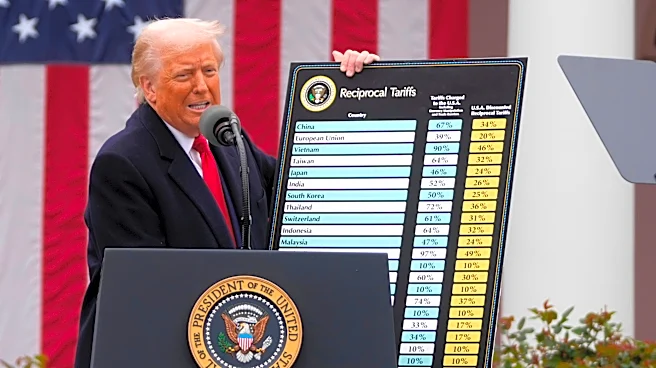
The United States Trade Representative (USTR), under the direction of President Trump, has imposed tariffs on 60 economies due to their failure to enforce prohibitions on goods produced with forced labor. This action follows extensive investigations,
public hearings, and consultations with trading partners. The tariffs aim to address human rights abuses and distortive trade practices. Exemptions are provided for certain products to prevent domestic supply shortages and economy-wide disruptions. The move is part of a broader effort to improve global labor standards and protect U.S. commerce from unfair foreign practices.
Why It's Important?
The imposition of tariffs is a significant step in addressing forced labor issues in global supply chains, which have long been a concern for human rights advocates. By taking this action, the U.S. is setting a precedent for holding countries accountable for labor practices, potentially leading to improved conditions for workers worldwide. Economically, the tariffs could affect international trade relations and lead to retaliatory measures from affected countries. U.S. businesses relying on imports from these economies may face increased costs, impacting their competitiveness and profitability.
What's Next?
Affected economies may seek diplomatic resolutions or adjustments to the tariffs, while U.S. businesses might push for exemptions or alternative sourcing strategies. The USTR will continue monitoring compliance with forced labor prohibitions, potentially leading to further actions or adjustments. International organizations and human rights groups may increase pressure on governments to improve labor standards and enforcement.