



What's Happening?
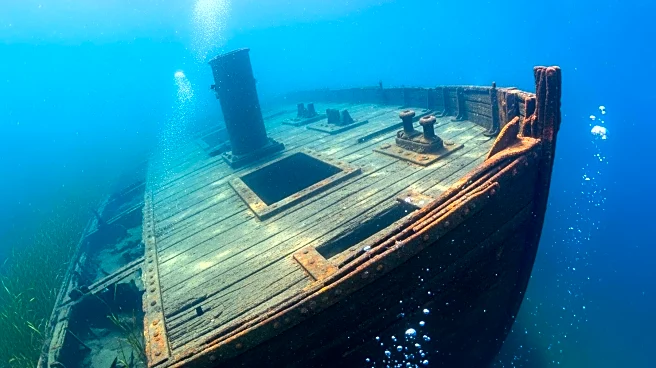
Paul Ehorn, an 80-year-old shipwreck hunter, has announced the discovery of the Lac La Belle, a 217-foot passenger steamer that sank in Lake Michigan over 150 years ago. The ship went down in 1872 during a stormy night, just two hours after leaving Milwaukee
for Grand Haven, Michigan. Of the 53 people on board, eight perished when a lifeboat capsized. The Lac La Belle was a luxury vessel, known for its speed and elegance, and was part of a commercial route carrying goods such as barley, flour, pork, and whiskey. Ehorn's discovery was aided by a fellow shipwreck hunter, Ross Richardson, who provided a crucial clue. Ehorn used side-scan sonar in October 2022 to locate the ship's silhouette. Despite challenges like bad weather, Ehorn and his team documented the site, noting that many parts of the ship, especially its hull, remain in good condition.
Why It's Important?
The discovery of the Lac La Belle is significant for maritime history and archaeology, offering insights into 19th-century shipbuilding and commerce on the Great Lakes. The ship's sinking is part of a broader historical context where over 6,000 shipwrecks have been documented in the Great Lakes, highlighting the dangers of maritime travel during that era. The Lac La Belle's recovery provides a tangible connection to the past, illustrating the challenges faced by vessels navigating these waters. For historians and archaeologists, such finds are invaluable for understanding the economic and social dynamics of the time, including the role of shipping in regional development and trade.
What's Next?
Paul Ehorn plans to present video footage of the Lac La Belle wreckage at the 2026 Ghost Ships Festival in Manitowoc, Wisconsin. This event will likely draw attention from historians, archaeologists, and the public, eager to learn more about the ship's history and its discovery. Ehorn continues his passion for shipwreck hunting, with plans to explore more sites. His ongoing work may lead to further discoveries, contributing to the preservation and understanding of maritime heritage in the Great Lakes region.