



What's Happening?
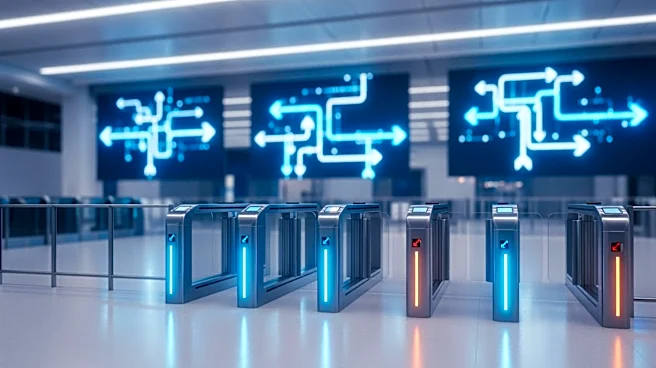
European airports are experiencing significant travel disruptions due to the implementation of the European Union's new Entry/Exit System (EES). This system, which began its rollout in October, requires biometric scanning for all non-EU passport holders
entering the Schengen area. The system aims to enhance border security across 29 nations, including 25 EU members and countries like Iceland, Liechtenstein, Norway, and Switzerland. However, the implementation has been problematic, leading to long lines and delays at major European airports. CNN's chief international correspondent, Clarissa Ward, reported missing her flight due to the extensive wait times at Lisbon airport, describing the situation as chaotic. The delays have prompted airlines to request a suspension of the new measures during peak travel periods.
Why It's Important?
The travel chaos caused by the EES has significant implications for international travelers, particularly Americans planning to visit Europe. The delays and missed flights could deter tourism and business travel, impacting the European travel industry economically. Additionally, the operational challenges highlight the complexities of implementing large-scale biometric systems, raising questions about the readiness of infrastructure to handle increased travel volumes. The situation underscores the need for effective coordination between airlines, airports, and EU authorities to ensure smooth travel experiences and maintain the region's attractiveness as a travel destination.
What's Next?
As the summer travel season approaches, pressure is mounting on EU authorities to address the operational issues with the EES. Airlines are advocating for a temporary suspension of the system during peak travel times to alleviate congestion. EU officials may need to reassess the rollout strategy and enhance support for airports to manage the increased demand. Travelers are advised to prepare for potential delays and plan accordingly. The situation may also prompt discussions on improving the system's efficiency and exploring alternative solutions to balance security and convenience.