





What's Happening?
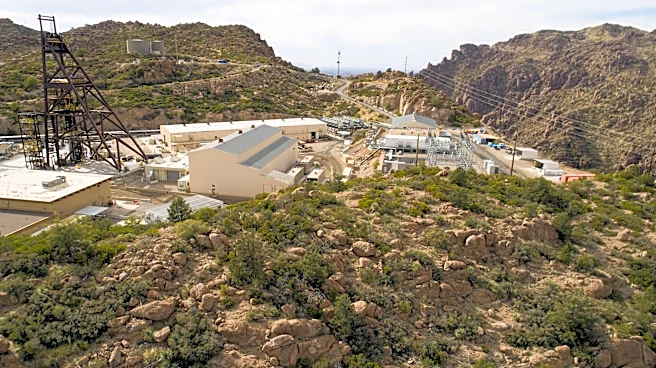
An interministerial commission in Panama has recommended to President José Raúl Mulino an 'ordered and self-financed' closure of the Cobre Panama copper mine, operated by Minera Panamá, a subsidiary of the Canadian company First Quantum Minerals. The
mine has been paralyzed since November 2023 after a Supreme Court ruling declared its concession contract unconstitutional, following widespread protests. The commission's report, based on an audit by Swiss firm SGS, suggests a progressive closure without extension, funded by the mine itself. President Mulino stated that the report is a study and recommendation, not a final decision, and emphasized that the closure process, if adopted, would be orderly, self-financed, and verifiable step-by-step, potentially spanning decades. The mine's shutdown has had significant economic repercussions, including the loss of approximately 7,000 direct jobs and over 4% of Panama's GDP, and has led to international arbitration claims totaling $27 billion against the country, which are currently suspended.
Why It's Important?
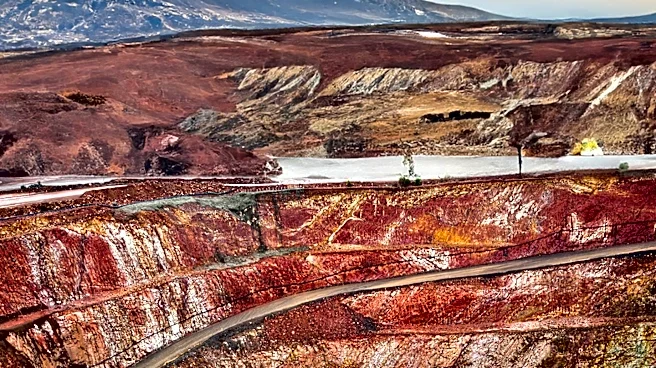
The decision regarding the Cobre Panama mine holds significant economic and environmental implications for Panama. The mine previously contributed around 5% to the nation's Gross Domestic Product (GDP) and accounted for a substantial portion of its exports and government revenue. Its closure has resulted in considerable economic losses, including a daily export reduction of $6.8 million and a daily fiscal impact of $1.3 million. Furthermore, the ongoing paralysis of the open-pit copper mine poses environmental risks if not managed properly. The commission's recommendation for a self-financed closure aims to prevent the Panamanian state from incurring the substantial financial burden of decommissioning, which could otherwise compromise public resources for years. The resolution of this issue is crucial for Panama's economic stability, environmental protection, and its standing in international investment, particularly given the pending arbitration claims.
What's Next?
President José Raúl Mulino is now tasked with making a final decision on the future of the Cobre Panama mine, considering the interministerial commission's recommendations. While the report suggests an 'ordered and self-financed' closure, it does not specify a timeline, indicating that the process could take years or even decades. Mulino has previously expressed a desire to reactivate the mine due to its economic benefits and has hinted at a 'real partnership' with the mining company. The commission's proposal also advises evaluating the feasibility of an agreement to resolve pending arbitration proceedings and establish conditions for a restart that would lead to an orderly closure. First Quantum Minerals has acknowledged the recommendations and is awaiting further guidance from the Panamanian government, indicating a willingness to engage constructively in negotiations to establish a fair and transparent legal framework for the mine's operations.
Beyond the Headlines
The situation surrounding the Cobre Panama mine highlights the complex interplay between economic development, environmental protection, and social justice in resource-rich nations. The initial protests and the Supreme Court's ruling underscore a growing public demand for environmental accountability and transparent governance in large-scale industrial projects. The commission's recommendation for a self-financed, orderly closure, even if it involves a temporary restart, reflects an attempt to balance economic recovery with long-term environmental responsibility and avoid burdening taxpayers. This case could set a precedent for how governments manage the closure of major industrial sites, particularly in the face of legal challenges and public opposition. It also brings to light the ethical considerations for multinational corporations operating in developing countries, emphasizing the need for robust environmental and social impact assessments and adherence to local laws and community concerns.