





What's Happening?
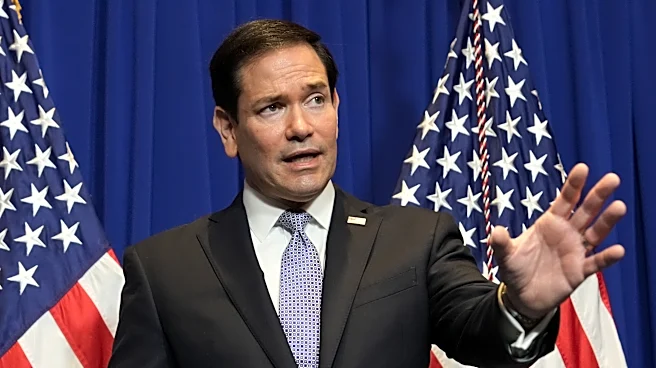
Director of National Intelligence Jay Clayton and National Security Adviser Marco Rubio have stated that the Trump Administration has found no indication of a coordinated cyberattack, state-sponsored activity, or any malign actor behind recent widespread
tech outages. They clarified that these incidents, which included disruptions to Microsoft, the FAA, and several banks, are separate and unrelated. According to Clayton and Rubio, the outages are attributable to companies addressing vulnerabilities and upgrading outdated systems. Secretary Rubio emphasized the importance of transparency in addressing public uncertainty, reassuring the American people that there is no systemic attack underway. He explicitly stated that every indicator points to individual explanations for each event, ruling out cybercriminals, hostile actors, or other nation-states as causes. The administration is focused on strengthening America's digital infrastructure.
Why It's Important?
The joint statement from DNI Clayton and Secretary Rubio is crucial for maintaining public confidence and stability in the face of widespread technological disruptions. In an era where cyber threats are a significant concern, official reassurance that recent outages are not the result of malicious attacks helps to prevent panic and misinformation. This clarity allows businesses and government agencies to focus on internal system improvements rather than preparing for external threats. The emphasis on companies patching vulnerabilities and upgrading systems highlights the ongoing challenge of maintaining robust digital infrastructure in a rapidly evolving technological landscape. It also underscores the administration's commitment to transparency regarding national security matters, aiming to mitigate public fear and uncertainty during periods of technological instability.
What's Next?
Following the reassurances from DNI Clayton and Secretary Rubio, the focus will likely shift towards continued efforts by companies and government agencies to enhance their digital infrastructure. This includes prioritizing the patching of vulnerabilities and upgrading outdated systems to prevent future disruptions. The administration's emphasis on America leading the effort to harden its digital infrastructure suggests ongoing initiatives and potential policy directives aimed at improving cybersecurity resilience across various sectors. While no coordinated attack was found, the incidents serve as a reminder of the fragility of complex technological systems and the continuous need for vigilance and investment in cybersecurity measures. Public and private entities are expected to review their protocols and infrastructure to prevent similar isolated incidents from causing widespread impact.
Beyond the Headlines
The official explanation for the recent tech outages, attributing them to system upgrades and vulnerability patching rather than cyberattacks, reveals a deeper narrative about the inherent complexities and fragilities of modern digital infrastructure. It highlights the constant, often unseen, work required to maintain vast technological networks and the potential for even routine maintenance to cause significant disruptions. This situation also touches upon the psychological impact of technological failures on a society increasingly reliant on digital services; the immediate public assumption of a cyberattack reflects a heightened awareness of digital threats. Furthermore, it underscores the critical role of government communication in managing public perception and preventing widespread panic during such events, reinforcing trust in official channels amidst a landscape often rife with speculation and misinformation. The incidents serve as a practical lesson in the ongoing, silent battle to keep digital systems operational and secure.