




What's Happening?
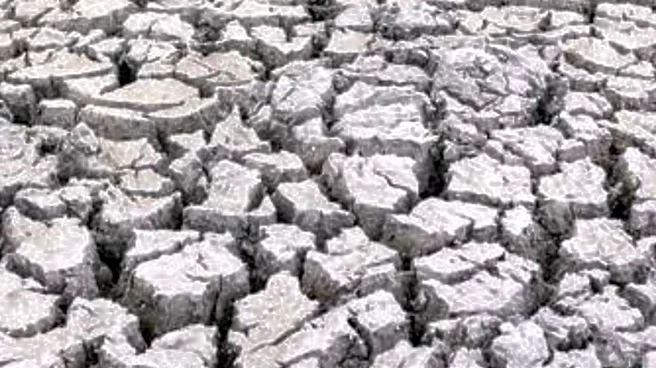
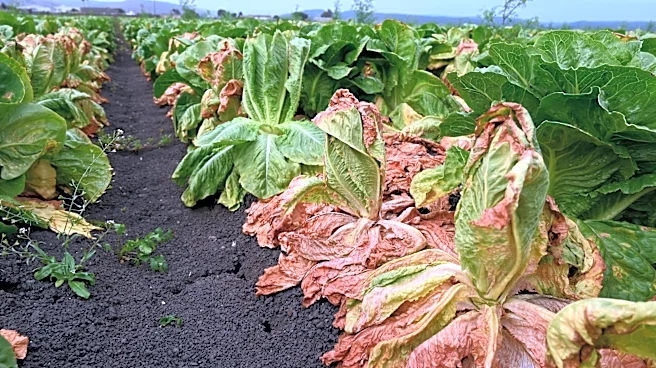
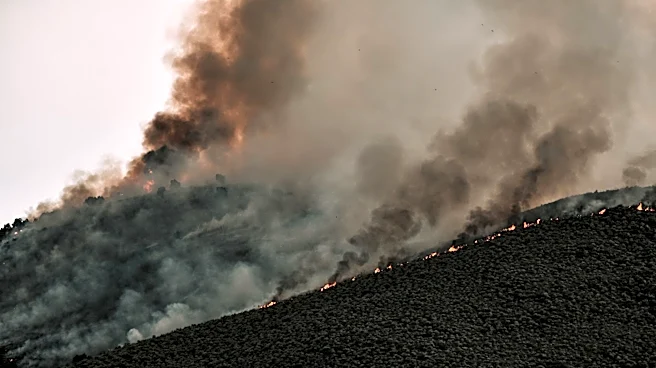
New research indicates that as global landscapes become drier, the prevalence of certain infectious diseases, including cholera, West Nile virus, and dengue, may increase. This phenomenon, termed the 'drought-disease paradox,' challenges the conventional
understanding that water-borne diseases thrive only with abundant water. The study, published in Trends in Ecology and Evolution and analyzed by Grist, reviewed nearly 100 studies involving humans and animals. It found that while dry conditions can reduce some disease threats by eliminating water sources, they can simultaneously create environments conducive to other pathogens. For instance, the 2017 drought in Somalia coincided with nearly 80,000 cholera cases, and California's 2014 superdrought was linked to a significant rise in West Nile virus cases. The research highlights that drought can alter the timing and location of mosquito-borne, food-borne, and dust-borne illnesses.
Why It's Important?
This research is important because it redefines the understanding of how environmental changes, specifically drought, impact public health. The 'drought-disease paradox' suggests that water scarcity, a growing concern globally, does not uniformly reduce disease risk but can shift it, potentially leading to new public health challenges. For the U.S., regions prone to drought, such as California, could face increased outbreaks of diseases like West Nile virus and valley fever, as observed in past drought periods. This necessitates a re-evaluation of public health strategies and resource allocation for disease prevention and control in drought-affected areas. The findings also underscore the interconnectedness of climate, environment, and human health, urging policymakers to integrate disease prevention into water management and climate adaptation plans. Understanding these complex interactions is crucial for protecting vulnerable populations and ensuring public health security in a changing climate.
What's Next?
Moving forward, scientists emphasize the need for improved tracking and monitoring systems to better anticipate and respond to disease risks associated with drought. Enhanced satellite monitoring could help researchers and officials track water shifts across landscapes, providing early warnings for potential outbreaks. The study also suggests that water management decisions, such as dam construction or irrigation expansion, must consider their potential impact on pathogen spread. Integrating disease prevention into drought planning, alongside water conservation efforts, will be critical. This includes closer attention to changing mosquito activity, water quality concerns, and the health effects of dust following 'weather whiplash' patterns—periods of wet weather followed by dry. Stakeholders, including public health agencies, environmental organizations, and policymakers, will need to collaborate to develop comprehensive strategies that address these evolving health threats.
Beyond the Headlines
The 'drought-disease paradox' reveals a deeper, less obvious implication of climate change: its capacity to create counterintuitive health challenges. This phenomenon highlights the complexity of ecological systems and how human interventions, or lack thereof, can inadvertently foster new public health crises. Ethically, it raises questions about equitable access to clean water and healthcare in drought-stricken regions, as vulnerable communities often bear the brunt of such outbreaks. Legally, it may prompt a re-evaluation of environmental regulations and public health mandates to better account for the nuanced impacts of drought on disease transmission. Culturally, it could shift public perception of drought from solely an agricultural or water supply issue to a direct public health threat, potentially galvanizing broader support for climate action and integrated environmental health policies. This research underscores the urgent need for a holistic approach to environmental management that considers all potential ramifications for human well-being.